Marseille in your language
Marseille museums with English audio guides and translations
Which Marseille museums you can actually visit in English: MuCEM, the Musée d'Histoire, the Cosquer cave replica, the Château d'If, the Vieille Charité museums, Notre-Dame de la Garde and the smaller collections, with what is translated, what it costs and the free first Sundays.
Marseille has around twenty museums and, until 2013, almost nothing in English. The Capital of Culture year changed that for the big institutions; the small municipal collections are catching up slowly. Here is what an English speaker can actually read or listen to, museum by museum, so you do not pay to stare at French labels.
Fully bilingual
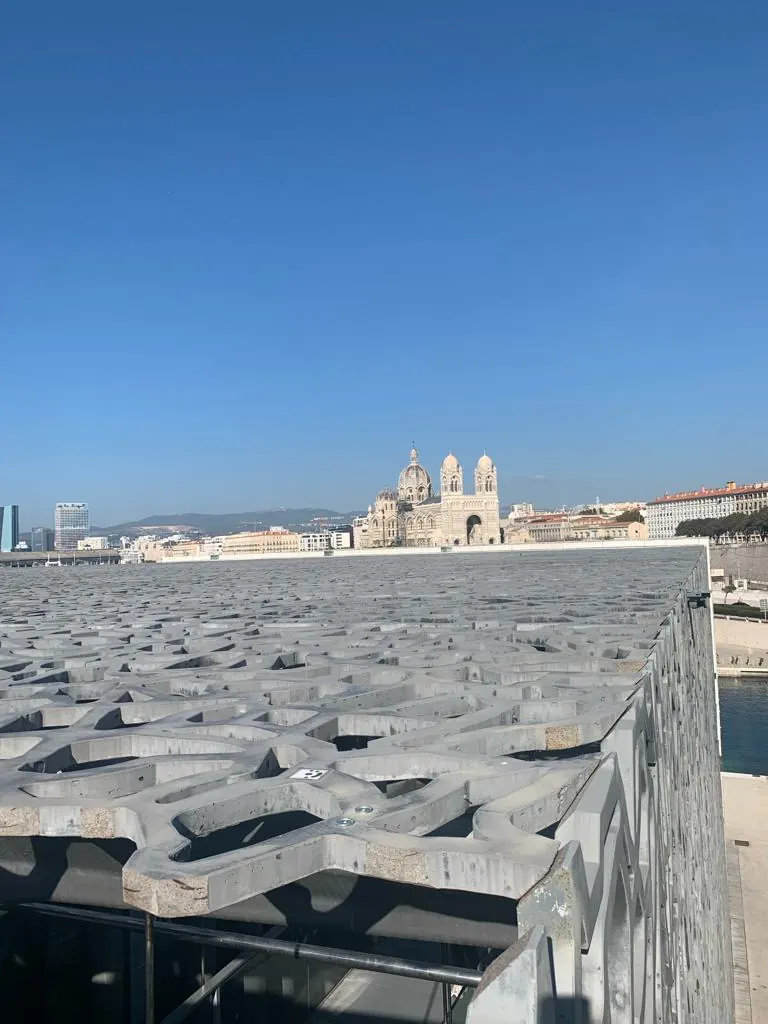
MuCEM (Museum of European and Mediterranean Civilisations). Panels in French and English throughout, an English audio guide, a bilingual app and website. The permanent galleries explore the Mediterranean through food, religion, cities and the sea; the temporary exhibitions are usually excellent. The building itself, the footbridge to Fort Saint-Jean and the roof terrace are free. Allow two hours inside, plus the fort. Closed Tuesdays.
Musée d’Histoire de Marseille. Behind the Centre Bourse shopping centre, built around the excavated Greek harbour (the Jardin des Vestiges, free, outside). An English audio guide follows 2,600 years of the city in thirteen sequences, from the Phocaean ships to the 1943 destruction of the old port district. The single most useful hour in Marseille for understanding what you see outside. Permanent collection free.
Cosquer Méditerranée. In the Villa Méditerranée next to the MuCEM: the full-scale replica of the painted cave discovered under the Calanques in 1985, visited from a slow vehicle with an audio guide in a choice of languages. Bison, horses, penguins and hands from 27,000 years ago. Book a time slot online; the visit takes about an hour.
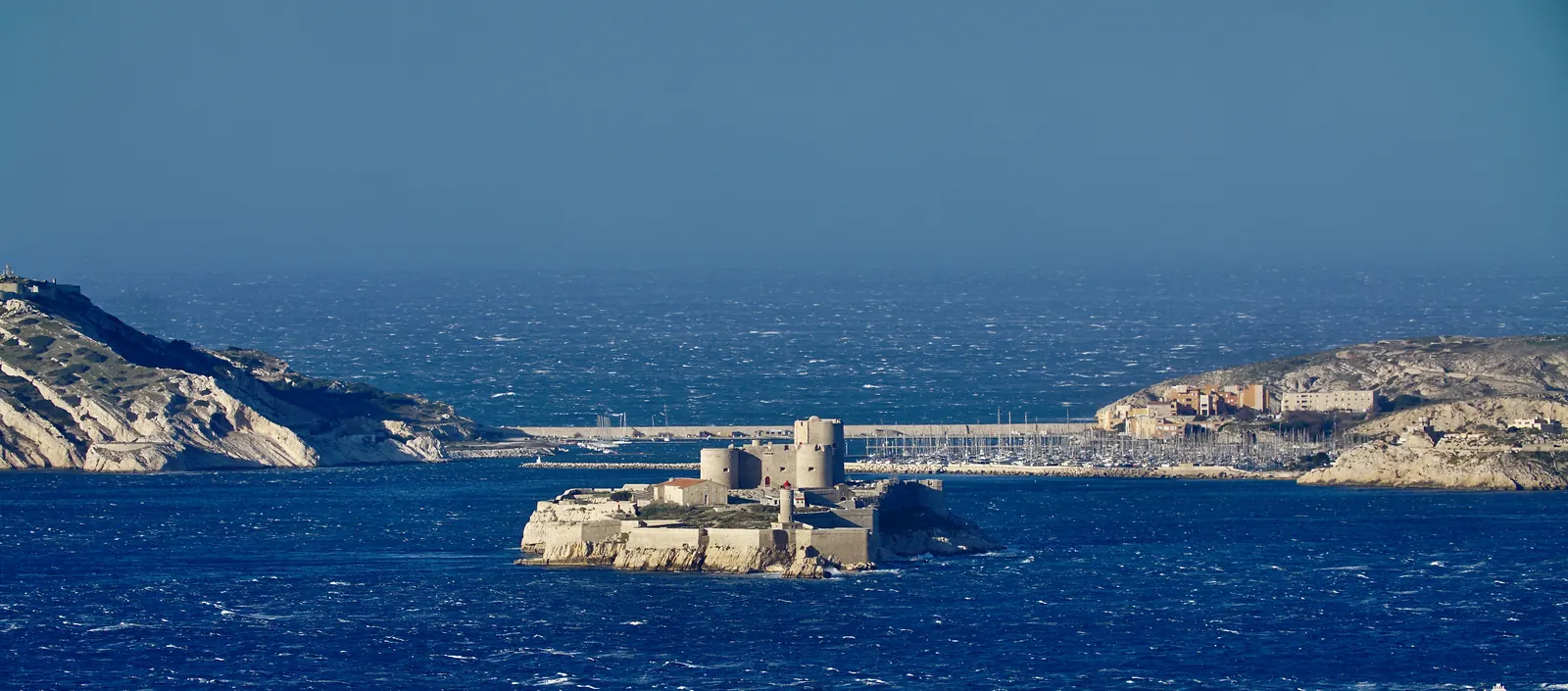
Château d’If. Bilingual panels on the island and an English audio guide at the entrance. The boat from the Vieux-Port needs no French. Closed in strong mistral.
Partly translated
Vieille Charité. Pierre Puget’s baroque almshouse in Le Panier houses the Museum of Mediterranean Archaeology (Egypt, Greece, Etruria, the Near East) and the Museum of African, Oceanian and Amerindian Arts. Each room has an English summary panel; individual labels are French. The courtyard and the chapel are free.
Notre-Dame de la Garde. Free entry to the basilica; leaflets in English; the small museum in the crypt has bilingual labels and tells the story of the hill and the ex-votos. Bus 60 from the Vieux-Port.
Musée Regards de Provence. In the former sanitary station of the port next to the MuCEM: Provençal painting and a film about the building’s role in quarantining migrants; English texts on the main panels and a bilingual film.
Musée des Beaux-Arts and Musée d’Histoire Naturelle at the Palais Longchamp. Room texts in English, labels in French. The water palace of 1869 and its park are the real reason to come.
French only, still worth it
Musée Cantini (modern art, Surrealism, in an 18th-century mansion near Noailles), the Musée des Docks Romains (the Roman warehouses under the Panier, small and free), the Mémorial de la Marseillaise, the Musée Grobet-Labadié (a collector’s house near Longchamp) and the Musée du Savon de Marseille run by a soap works. The art needs no translation; for the rest, the museum apps and a phone camera with a translation app fill the gap.
Practical
- Free days. The MuCEM is free on the first Sunday of the month; municipal permanent collections are free every day.
- Closing days. Most museums close on Monday; the MuCEM closes on Tuesday. The Château d’If closes in bad weather.
- Passes. The Marseille City Pass bundles transport, the MuCEM, the If boat and entry, and the Cosquer replica on some versions.
- Kids. The MuCEM has a children’s space; the Cosquer replica and the Château d’If are the two visits children remember.
For the city beyond the museums, from restaurants to football, read Marseille for English speakers. If you have one day from a cruise ship, our walking route from the cruise terminal passes the MuCEM and the Vieille Charité.
Frequently asked questions
Which Marseille museum is best for English speakers?
The MuCEM: fully bilingual panels, an English audio guide and app, and a building worth the visit on its own. The Musée d'Histoire de Marseille is the best for understanding the city, with an English audio guide through 2,600 years.
Are Marseille's museums free?
The city's municipal museums (Musée d'Histoire, Vieille Charité collections, Musée Cantini, Beaux-Arts at Longchamp and others) have free permanent collections; temporary exhibitions are paid. The MuCEM and the Château d'If are national and charge entry, with free admission on the first Sunday of the month for the MuCEM and for under-26 EU residents.
Does the Marseille City Pass include museums?
Yes. The 24, 48 or 72-hour pass covers public transport, the MuCEM, the Château d'If boat and entry, the Cosquer replica on some versions, and guided walks from the tourist office. It pays off with two paid sites and the island in one day.