Start here
The must-see sights in Marseille
The ten places every first visit to Marseille should include, chosen and photographed by people who live here: Vieux-Port, Notre-Dame de la Garde, Le Panier, Château d'If, Vallon des Auffes, MuCEM, the Calanques, La Major, the Corniche and Malmousque.
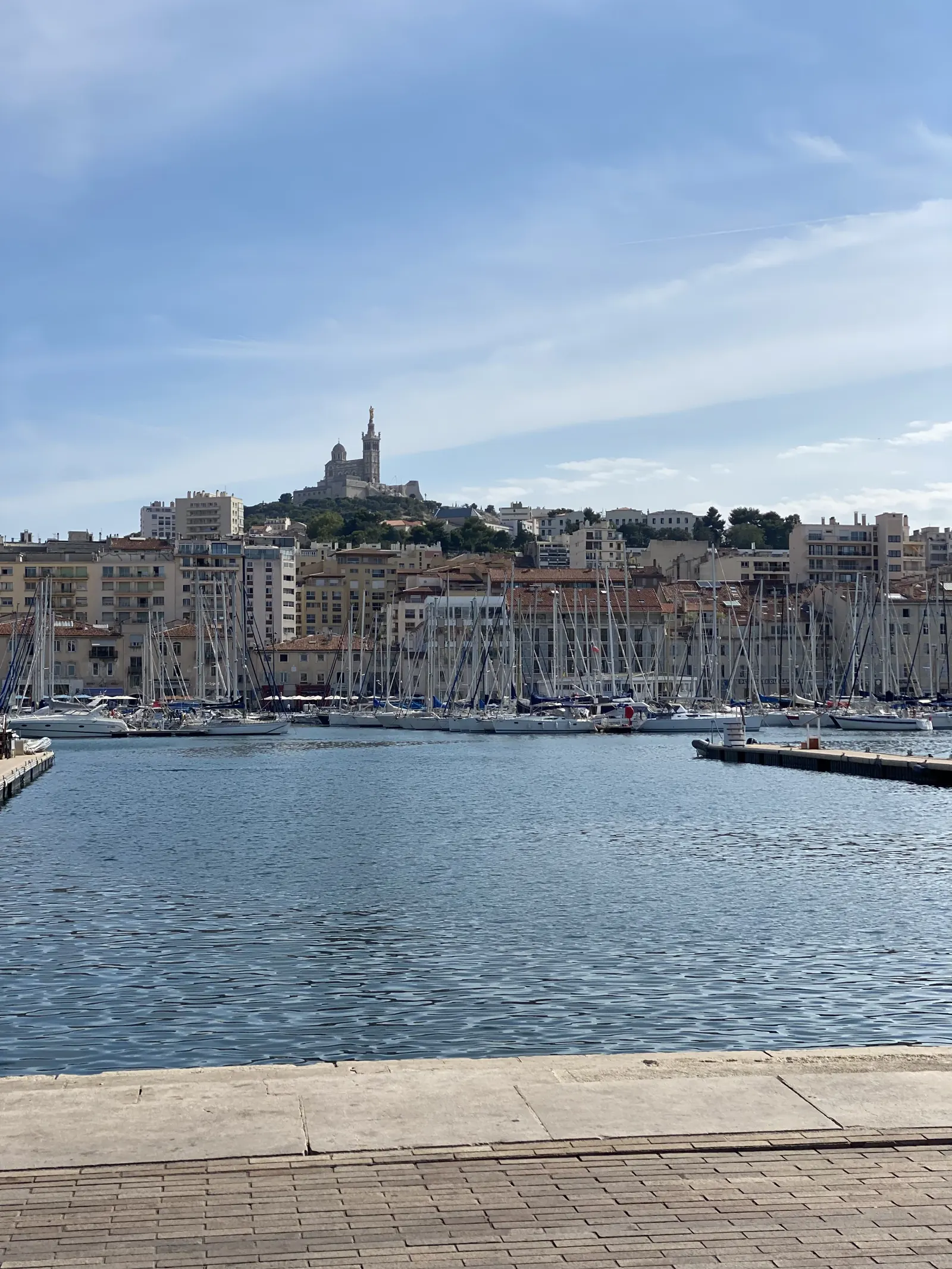
If you visit France, take the time to visit Marseille, one of the oldest and most interesting cities in Europe. Founded 2,600 years ago, the Phocaean city is full of sights, ancient and modern, and of things to do around them. We live here and have walked these places hundreds of times. Here are the ten we would never leave out, followed by three things you should do while you are here.
1. The Vieux-Port
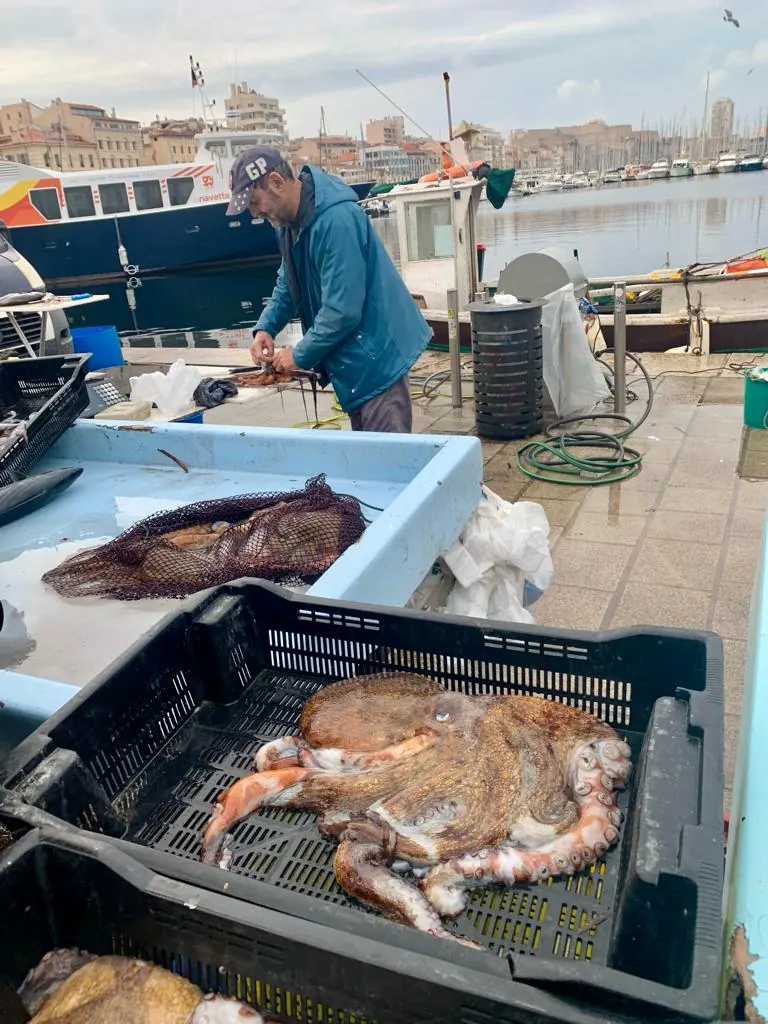
When people talk about Marseille, they start with the Lacydon, the natural harbour where Greek sailors from Phocaea landed around 600 BC. The Old Port is the birthplace of the city and still its meeting place. Every morning, fishermen sell the night’s catch on the Quai des Belges; every evening, the quays fill with people walking, drinking and arguing about football. On match days, when Olympique de Marseille plays, the atmosphere is beyond description.
Since 2013 the head of the port has been shaded by the Ombrière, a mirrored steel canopy by Norman Foster that reflects the crowd upside down and has become the city’s favourite selfie spot. This is where most excursions begin, and where the boats to the islands leave from. For food lovers, the fish market is also where to start understanding bouillabaisse, the saffron fish stew that is the pride of the local cuisine. Real bouillabaisse is ordered in advance, served in two courses and never cheap.
2. Basilique Notre-Dame de la Garde
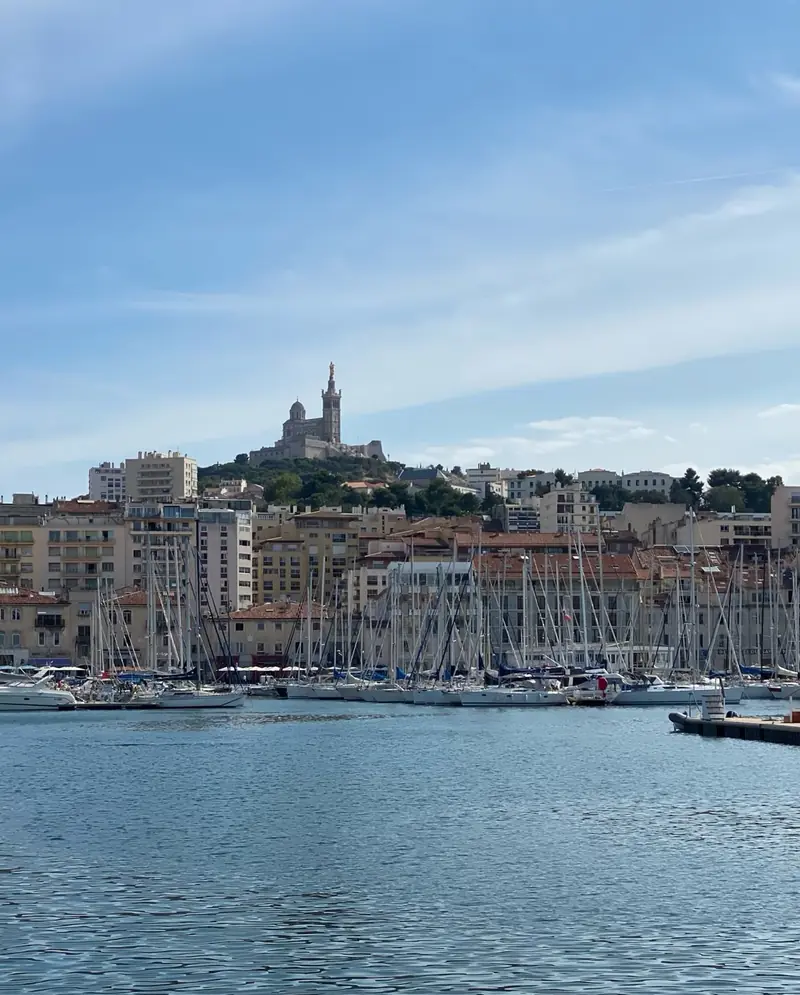
The “Bonne Mère” stands on a limestone hill 150 m above the harbour, visible from everywhere in the city and from far out at sea. The hill has been a lookout since the Middle Ages and a fort since the 16th century; the present basilica was built between 1853 and 1864 in a striped Romano-Byzantine style, and its bell tower is crowned by a gilded statue of the Virgin and Child more than eleven metres high. Sailors, fishermen and the whole city consider her their protector, and the interior is hung with ex-votos: model boats, paintings of shipwrecks, football shirts.
The reward for the climb is the best panorama in Marseille: the Vieux-Port, the islands, the Calanques and the whole bay. Walk up from the port in about 30 to 45 minutes, or take bus 60. Entry is free; the small museum is paid. It is a place of worship, so keep silent in the prayer areas, dress decently, and note that visits stop during Mass.
3. Le Panier
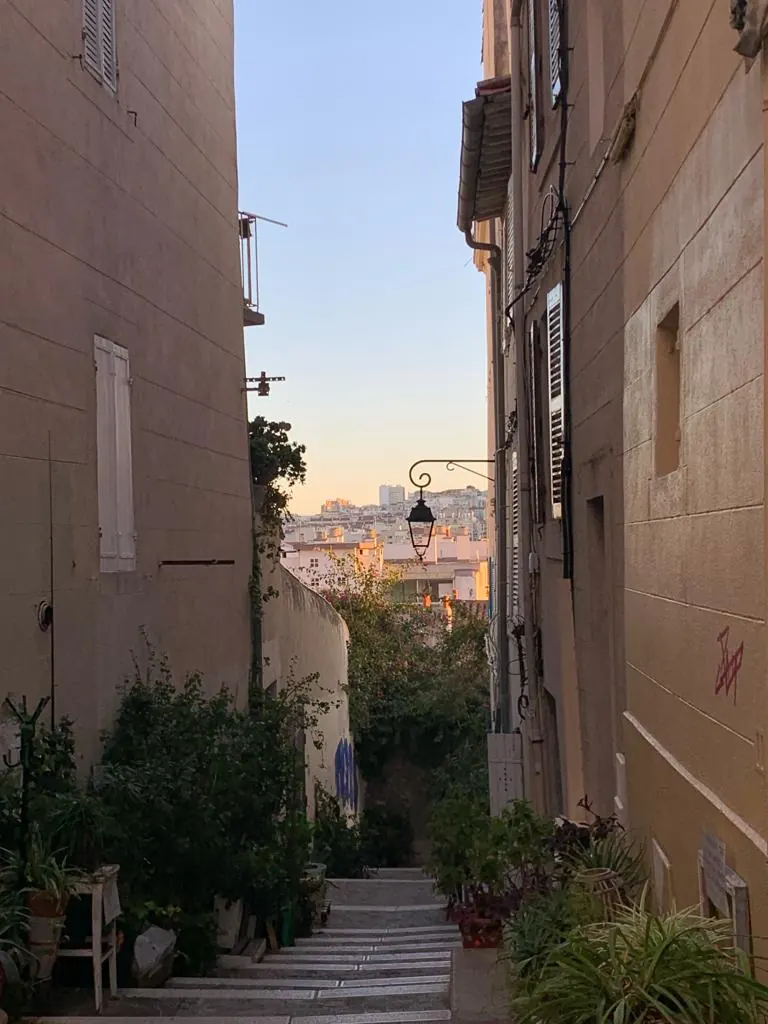
The Greeks landed in the port and settled on the hill just north of it. That hill is Le Panier, the oldest district in France, a maze of narrow lanes, stairs and small squares that has been inhabited for 2,600 years. Some people call it home; for everyone else it is an open-air museum with cafés.
Do not miss the Vieille Charité, a 17th-century almshouse by Pierre Puget with a baroque chapel at the centre of three arcaded galleries, today home to two museums; the Maison Diamantée with its faceted Renaissance façade; the Hôtel de Cabre of 1535, the oldest house in the city, famously rotated by 90 degrees in 1954 to align with the new street; the church of the Accoules; and the Place des Moulins at the top, where the windmills once stood. Street art, ceramics workshops and the savon de Marseille shops fill in the gaps.
4. Château d’If
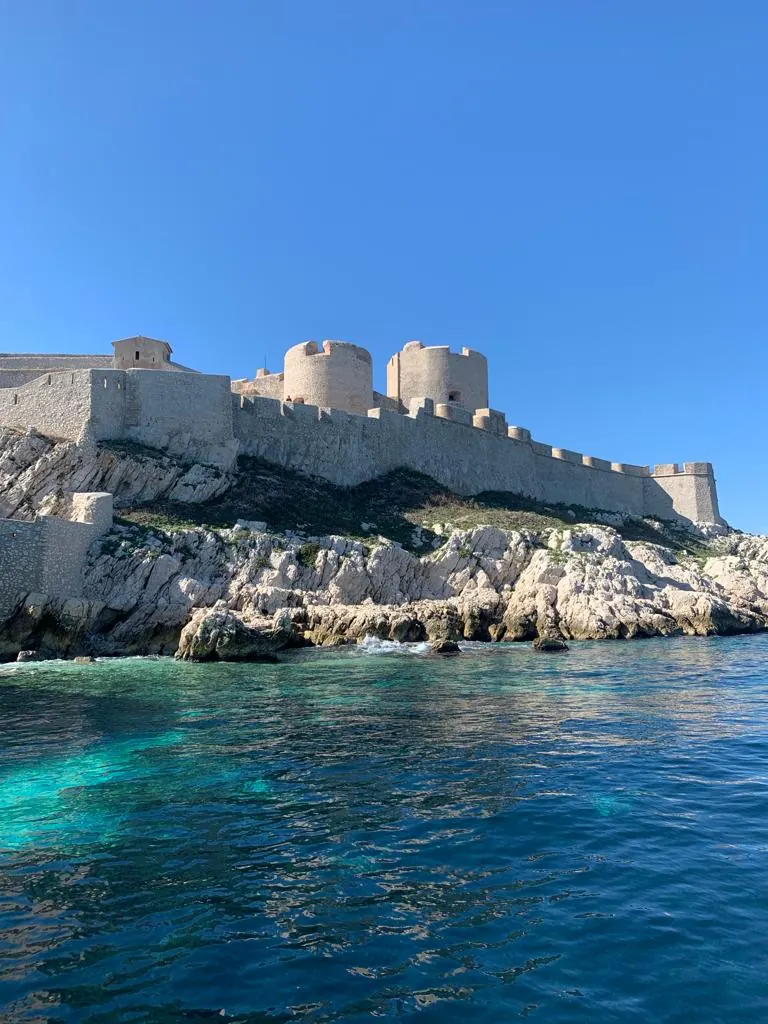
Do you remember The Count of Monte Cristo? Alexandre Dumas locked Edmond Dantès in this fortress for fourteen years, and the guards will show you his “cell”. Built between 1524 and 1531 under François I to defend the harbour, the castle on its tiny island became a prison for Protestants, political prisoners and anyone the king wanted forgotten. Escaping meant breaking chains, doors and then swimming a kilometre and a half under the eyes of armed guards, which almost nobody managed.
Today the crossing takes 20 minutes from the Vieux-Port and the view back towards the city from the ramparts is worth the trip on its own. Most private boat trips sail around the island before heading to the Frioul.
5. Vallon des Auffes
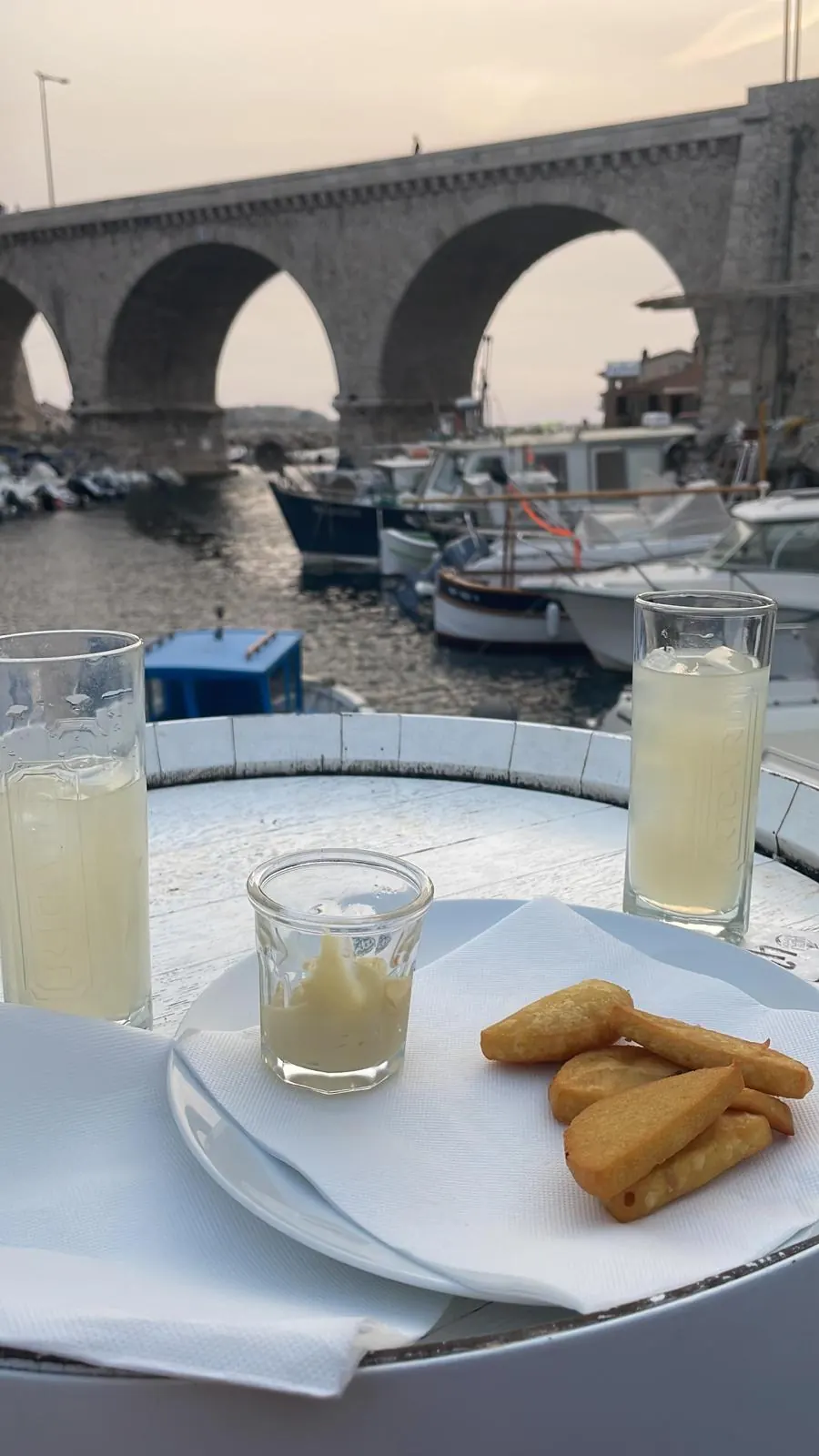
Two and a half kilometres from the Vieux-Port, under the arches of the Corniche viaduct, a tiny fishing harbour hides between two cliffs. The Vallon des Auffes takes its name from the auffe, the esparto grass that rope-makers wove here in the 19th century. Today it is a village of cabanons, colourful boats and some of the best fish restaurants in the city, from a pizzeria on the quay to a Michelin-starred table.
Come at the end of the afternoon, order a pastis and a plate of panisses on the rocks, and watch the light change on the arches. Residents call it the dolce vita of Marseille, and they are right. It is the best apéritif stop on the whole coast.
6. MuCEM and Fort Saint-Jean
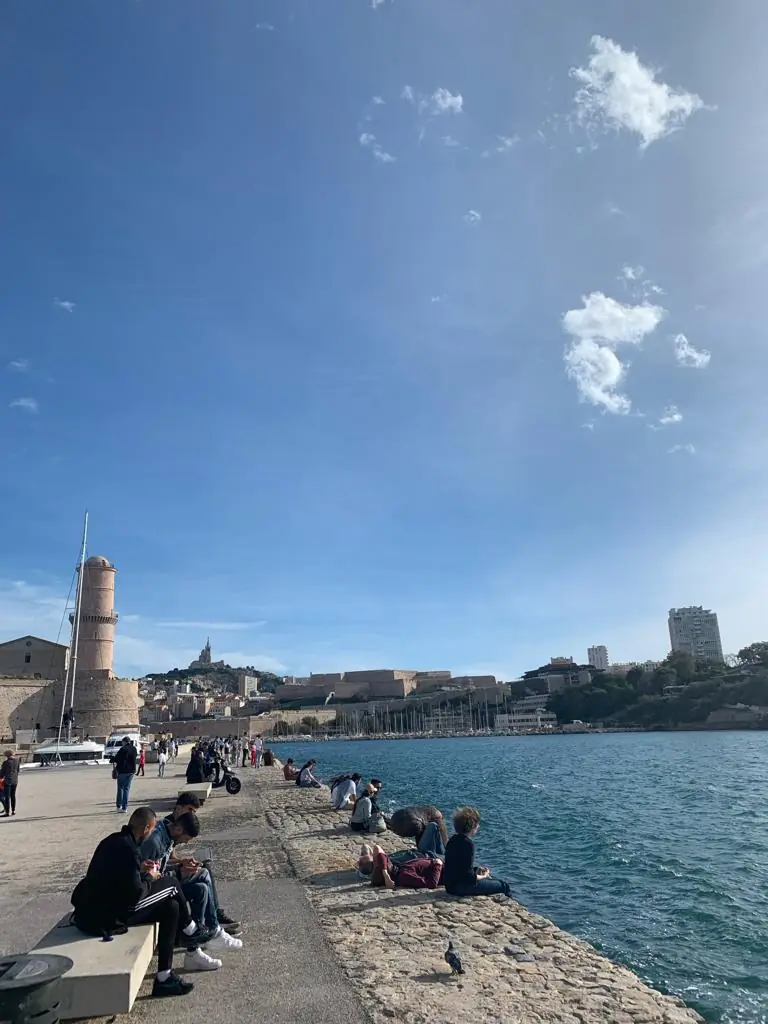
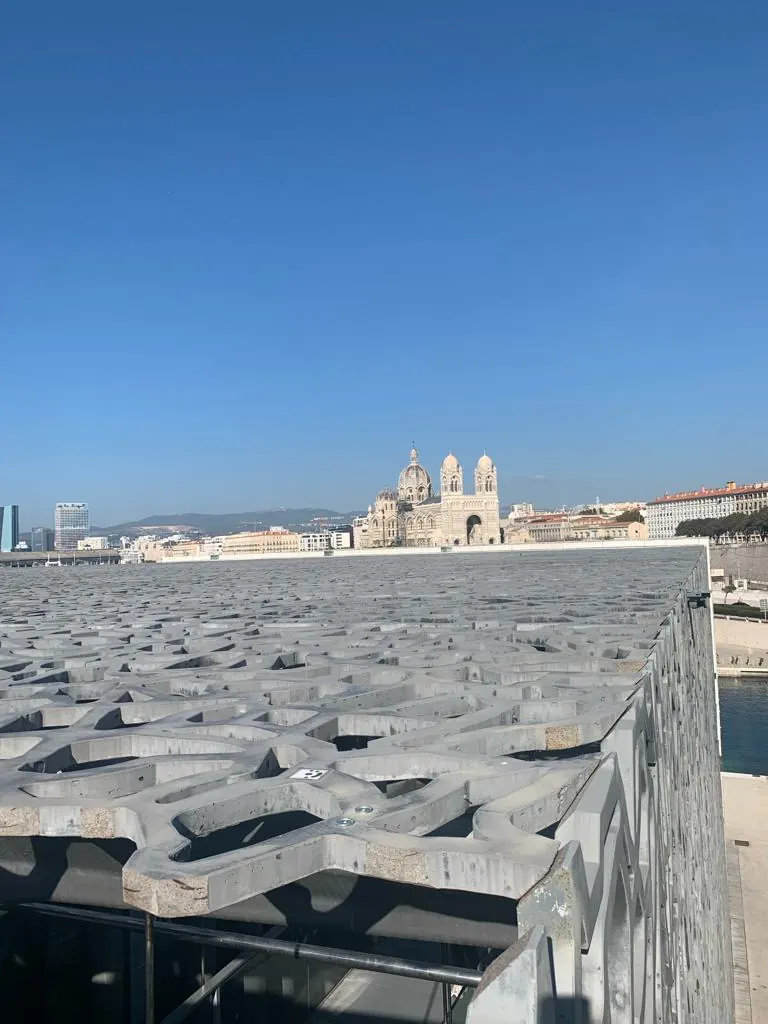
Opened in 2013, when Marseille was European Capital of Culture, the Museum of European and Mediterranean Civilisations was the first French national museum outside Paris. Rudy Ricciotti’s J4 building is a dark cube wrapped in a lace of concrete, joined to the medieval Fort Saint-Jean by a slender footbridge 130 m long. The exhibitions explore the cultures of both shores of the Mediterranean; the fort’s gardens, the roof terraces and the footbridge are free and offer the best sunset in the city.
Families: the J4 has a children’s space, and the walk through the fort costs nothing. Food lovers: the three-starred chef Gérald Passédat runs the restaurant on the roof.
7. The Calanques
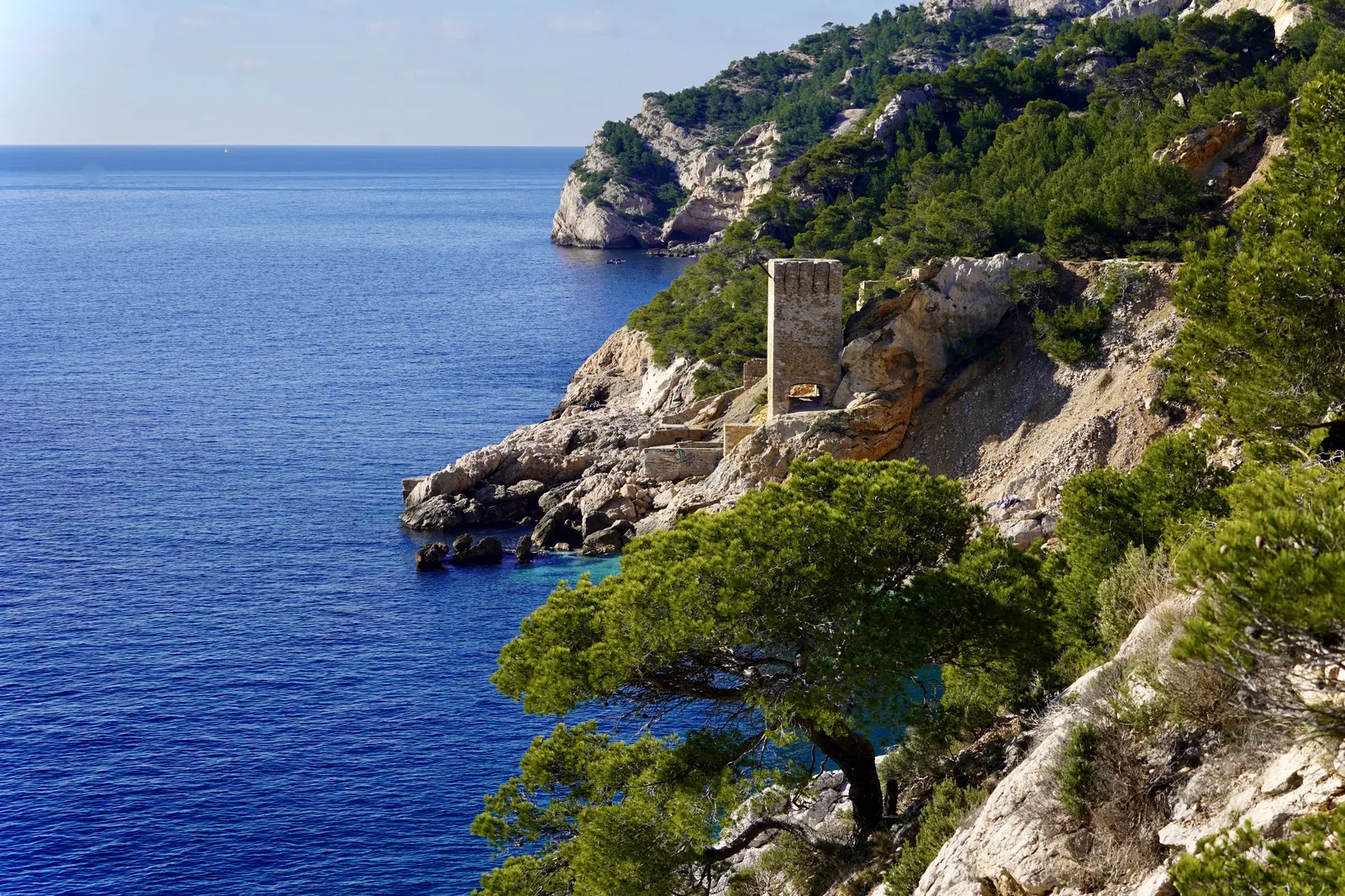
Between Marseille and Cassis, twenty kilometres of white limestone cliffs plunge into turquoise water, cut by narrow inlets called calanques. The Calanques National Park, created in 2012, is the only one in Europe that is partly urban: bus 20 from the city takes you to the start of the trails.
Sormiou and Morgiou have fishing hamlets and small beaches; Sugiton is the postcard, reached by a 45-minute walk from the Luminy campus; En-Vau, near Cassis, is the most dramatic. Access is regulated in summer for fire risk and, for Sugiton, by reservation on peak days; check the park’s website before you go. The Cosquer cave at Cap Morgiou, discovered in 1985, holds prehistoric paintings from 27,000 years ago; its underwater entrance is closed to the public, but a full-scale replica opened in 2022 at the Villa Méditerranée next to the MuCEM.
From the sea, the calanques are another experience entirely. We explain the options in our guide to private boat tours of the Calanques.
8. Cathédrale de la Major
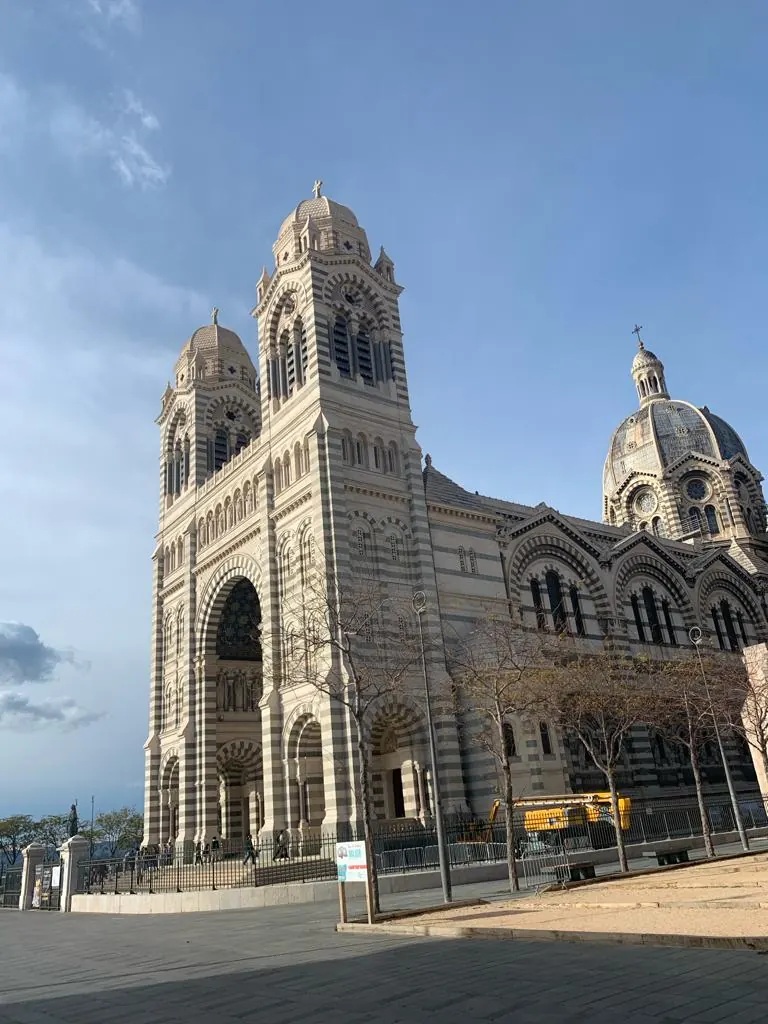
The last thing cruise passengers see as they sail away is the striped cathedral standing between the Panier and the docks. Sainte-Marie-Majeure was begun in 1852, with Napoléon III laying the first stone, and completed in 1893 by three successive architects, Léon Vaudoyer, Henri Espérandieu and Henri Révoil. Built in alternating green and white stone in a Romano-Byzantine style, with domes inspired by Italy and onyx and mosaics from across the Mediterranean, it is one of the largest cathedrals in France. Next to it, the remains of the Romanesque Vieille Major, the 12th-century cathedral it replaced, are still standing. The vaulted arcades underneath now house restaurants and shops.
9. Corniche Kennedy
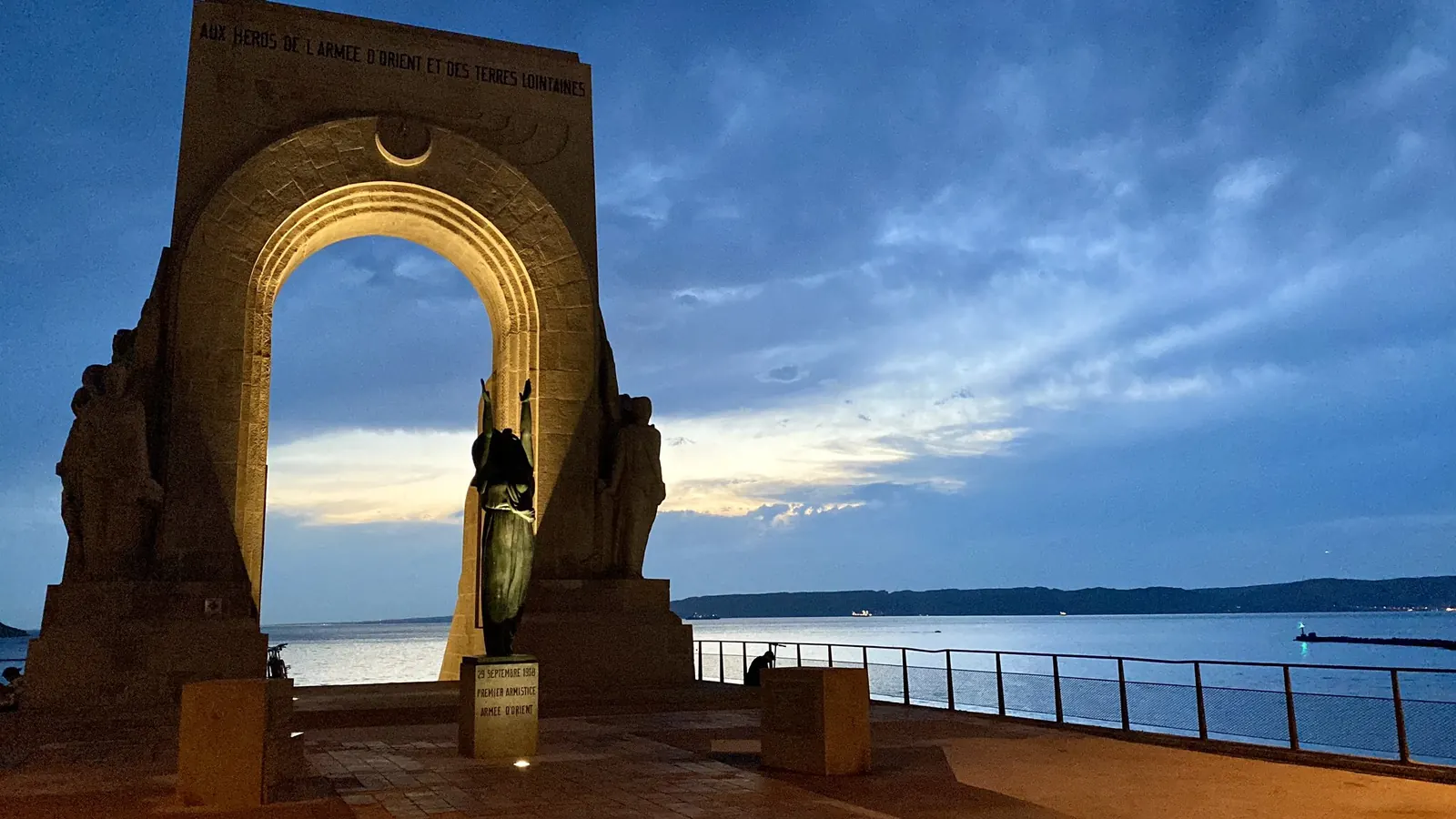
The seaside road from the Catalans beach to the Prado was built in the 19th century and renamed in 1963 after President Kennedy. It has the longest bench in the world (three kilometres of it), views of the islands at every turn and, on Sunday, half the city out for a walk. Along it: the Vallon des Auffes, the Monument aux morts de l’Armée d’Orient with its great arch framing the sea, the Anse de la Fausse-Monnaie, the villas of Endoume and, at the end, the beaches of the Prado, built in the 1970s with the earth dug out for the metro. The Catalans beach at the start has the city’s first underwater museum, ten sculptures five metres down, free for anyone with a mask.
10. Malmousque
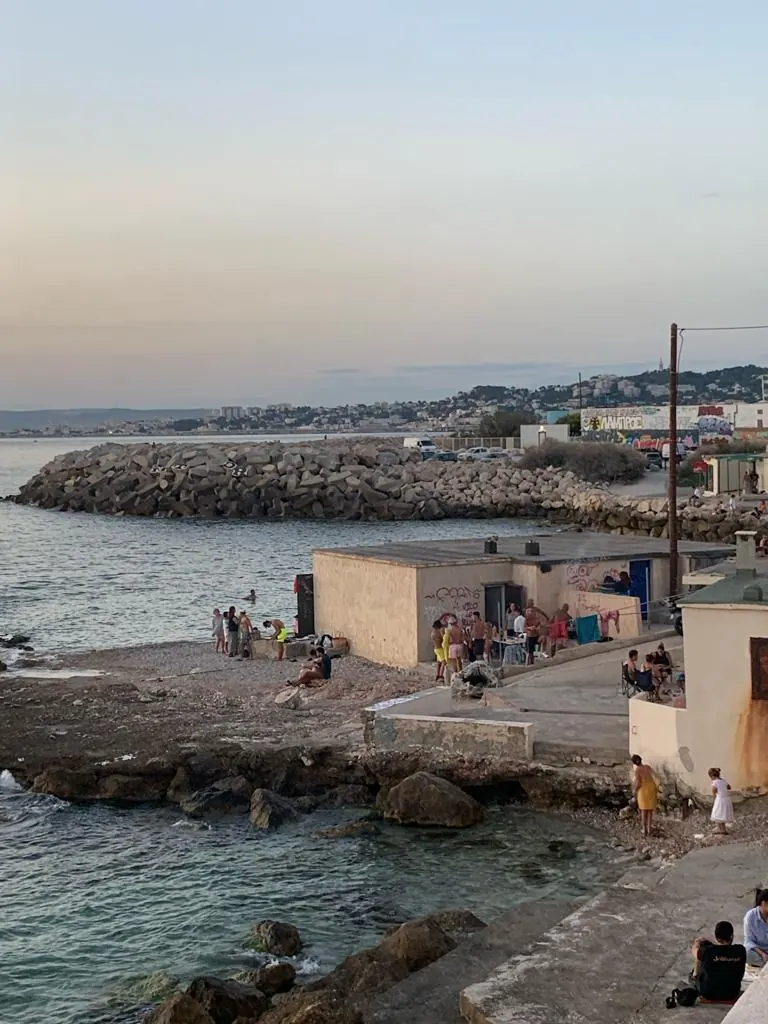
Squeezed between the Corniche and the sea, Malmousque is an old fishing village that became a quiet residential enclave, with stairs down to rocky coves and some of the clearest water in the city. The Anse de Maldormé and the Anse de Malmousque are where locals swim in September when the tourists have gone. Bring a towel, a mask and something to eat; there is almost nothing to buy here, and that is the point.
The must-dos
1. Walk it. The centre is compact and the stories are in the details: a plaque, a sticker, a bakery. Our three-day itinerary strings the first six places on this list into one morning, with lunch.
2. See yourself upside down. Stand under the Ombrière at the Vieux-Port and look up. People spend far longer under that mirror than they intended.
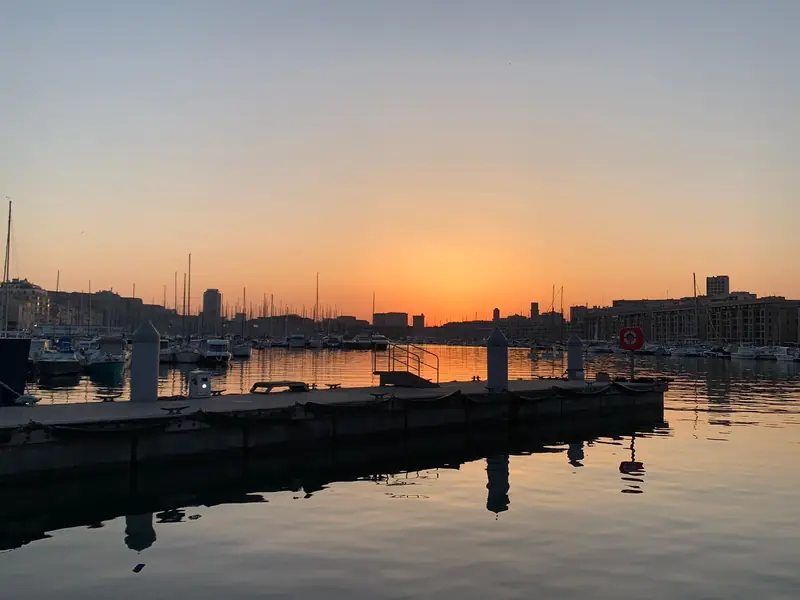
3. Watch the sun go down. From the MuCEM footbridge, the Pharo gardens, the Vallon des Auffes or a boat. Painters and photographers come to Marseille for its evening light, when the sky turns the blue of the city’s own logo. Pictures never quite capture it. Come and just breathe.
Frequently asked questions
How many days do I need in Marseille?
Two full days cover the historic centre, Notre-Dame de la Garde and a boat trip to the islands. A third day lets you add the Calanques or the Corniche and its fishing villages. A week lets you combine the city with Cassis, Aix-en-Provence and the Côte Bleue.
Is Notre-Dame de la Garde free to visit?
Yes. Entry to the basilica and its terraces is free; only the small museum is paid. It is a working place of worship, so dress and behave accordingly, and note that visits pause during services.
How do I get to the Château d'If?
Boats leave from the Vieux-Port (Quai de la Fraternité, near the Ombrière) several times a day and take about 20 minutes. Buy a boat ticket for the island and a separate entry ticket for the fortress, or visit the exterior and the views for the boat fare alone. Crossings are cancelled in strong mistral.