Start here
Calanques National Park guide: the calanques of Marseille and Cassis, on foot and by sea
How to visit the Calanques between Marseille and Cassis: which calanque suits you (Sormiou, Morgiou, Sugiton, En-Vau, Port-Pin), how to get there by bus, the summer access rules and reservations, the hikes with real timings, the boats, and what to bring.
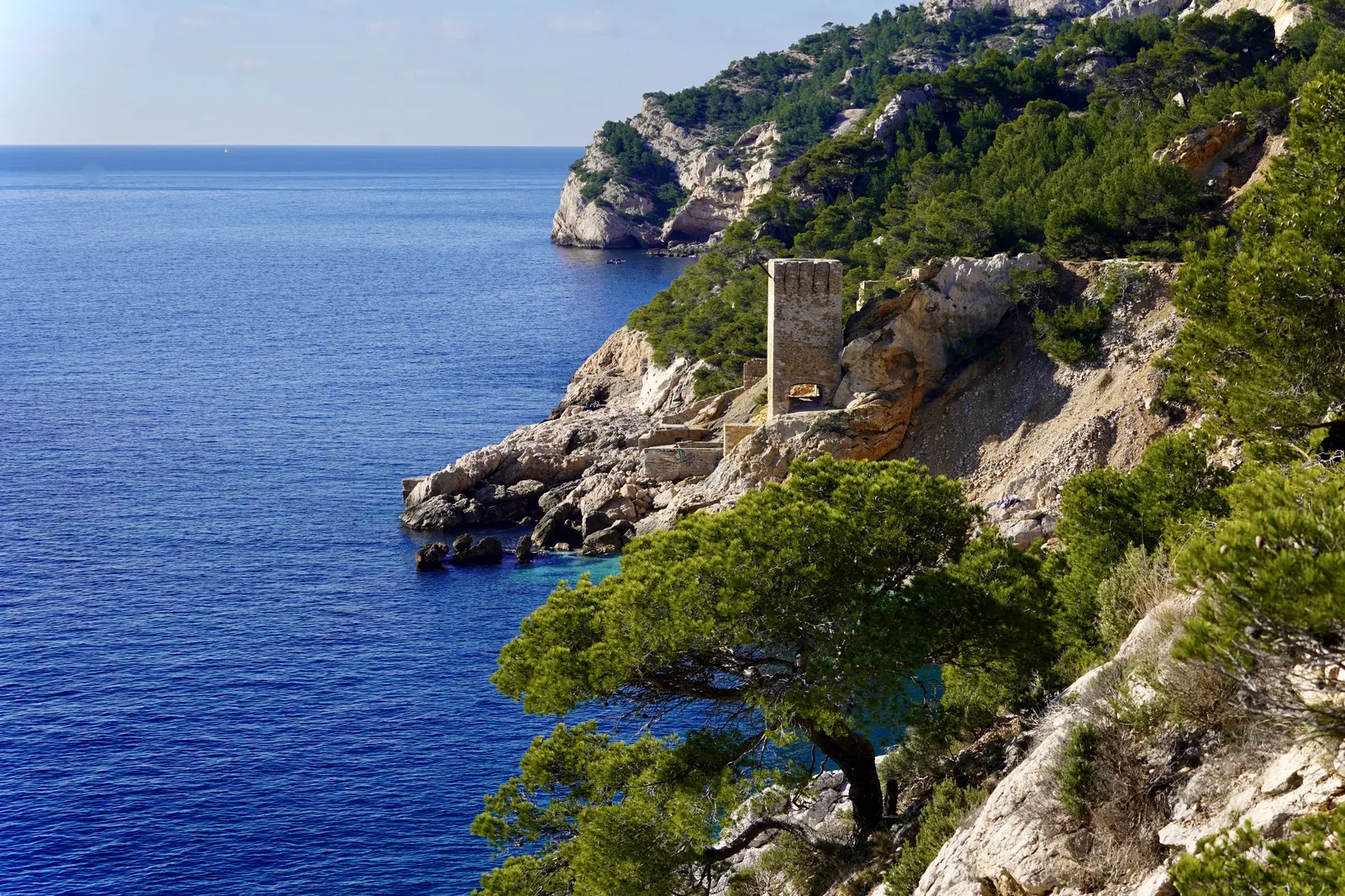
The Calanques are why many people come to Marseille, and the reason a lot of them leave frustrated: closed roads, a closure for fire risk, a trail that took twice as long as the app said, a boat that did not stop. This guide is the version we give friends, with the choices explained and the traps flagged.
What a calanque is
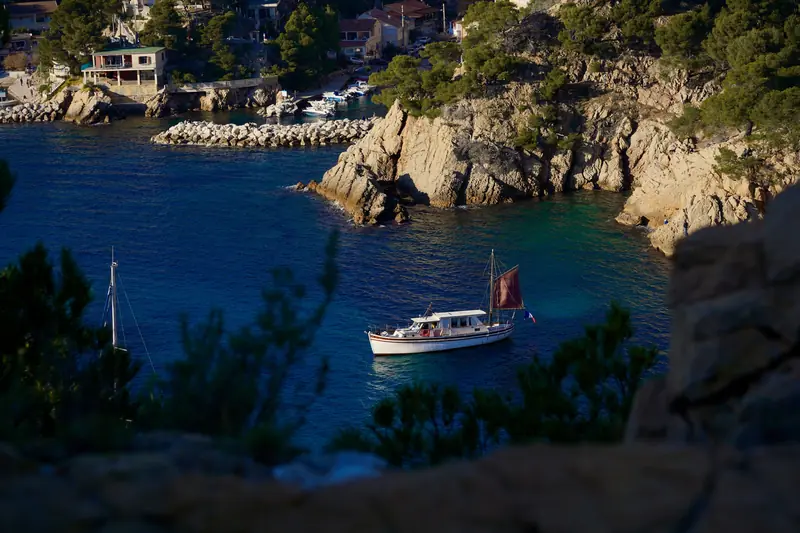
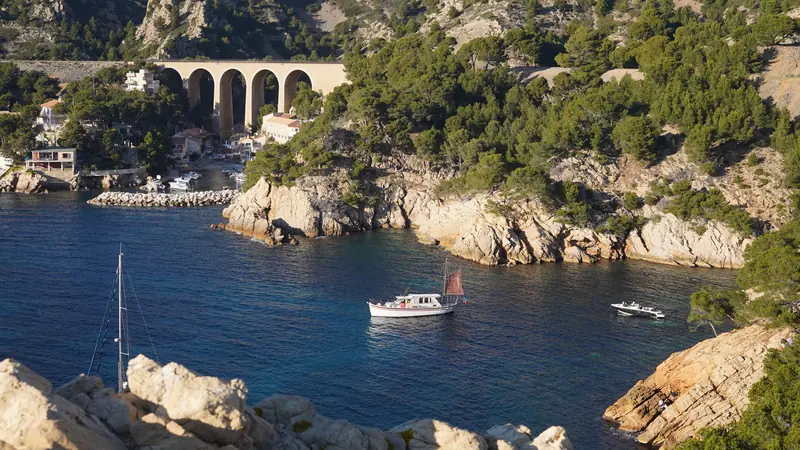
A narrow inlet cut into limestone cliffs, with turquoise water at the bottom and often a pebble beach or a fishing hamlet. The Calanques National Park, created in 2012, protects 20 km of coast between Marseille and Cassis plus the islands and a huge marine area; it is the only national park in Europe that is partly inside a city. There are about two dozen calanques; five matter to most visitors.
Which calanque for you
| Calanque | From | Walk | Difficulty | What you find |
|---|---|---|---|---|
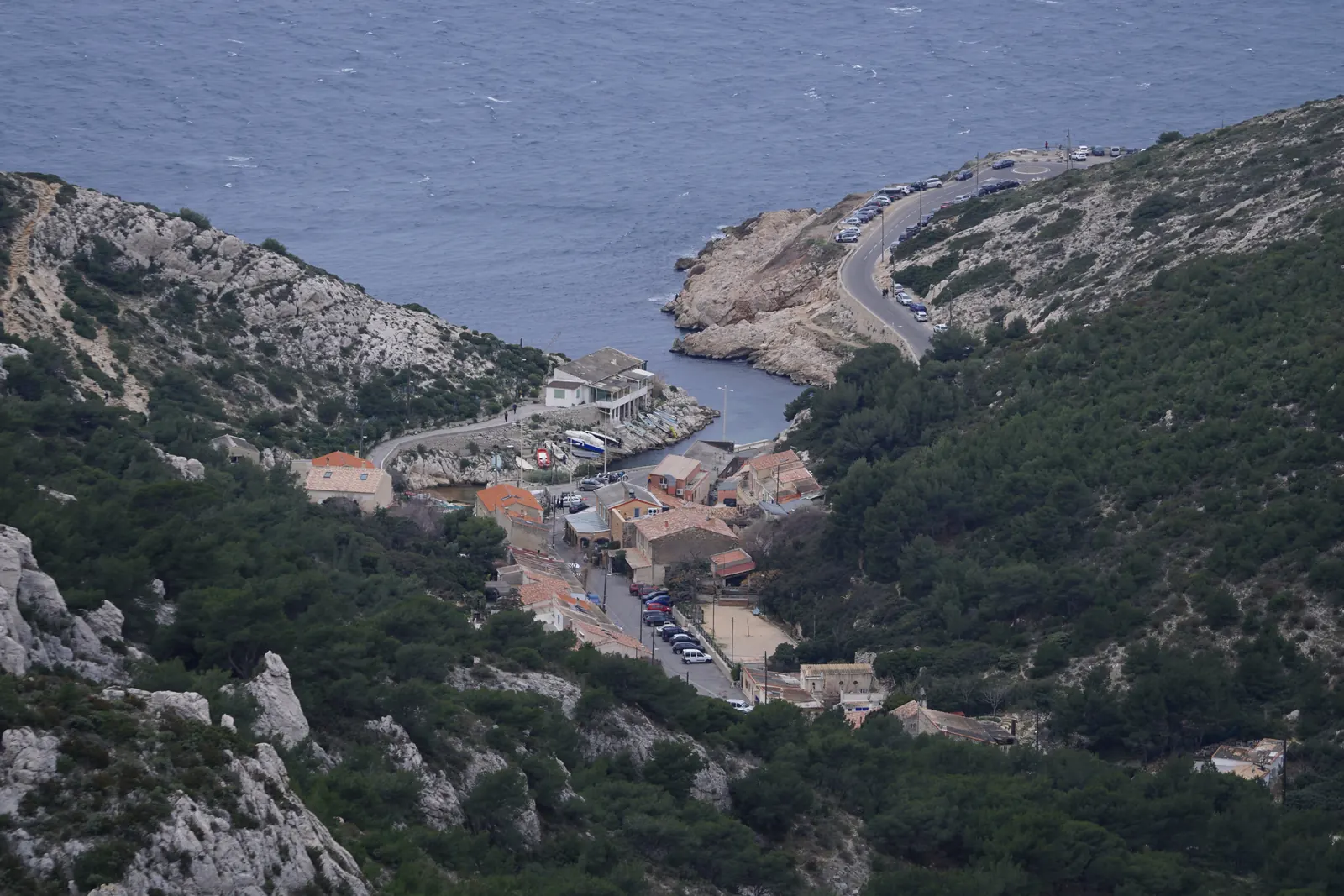
| Sormiou | Bus 22 or 23 terminal (Les Baumettes) | 45 min down, 60 up | Easy road walk | Sandy beach, cabanons, a restaurant in season |
| Morgiou | Bus 22 terminal (Les Baumettes) | 45 to 60 min | Easy road walk | Tiny port, hamlet, deep water swimming |
| Sugiton | Bus 21 or B1 terminal (Luminy) | 45 min down, 60 up | Moderate, rocky | The postcard: two coves, a rock island; reservation on peak days |
| En-Vau | Cassis (Presqu’île car park) or Luminy | 1 h 30 to 2 h each way | Hard, steep, exposed | The most dramatic cliffs, pebble beach, no shade |
| Port-Pin and Port-Miou | Cassis | 20 to 45 min | Easy | Pines to the water, a marina in the fjord |
| Marseilleveyre and Callelongue | Bus 20 terminal (Callelongue) | 30 to 90 min | Moderate | Wild coves, the Île Maïre in front, the least visited |
Getting there without a car
The park is designed to be reached by bus. From the Rond-Point du Prado (metro line 2, Rond-Point du Prado), buses 21 and B1 go to Luminy (Sugiton), 22 to Les Baumettes (Sormiou, Morgiou), 19 then 20 to Callelongue via La Madrague. In summer a shuttle serves Les Goudes and Callelongue, and the city’s sea shuttle runs from the Vieux-Port to the Pointe Rouge and Les Goudes. From Cassis, the train from Saint-Charles takes 25 minutes and a shuttle bus links the station to the port. Full details of tickets and lines in how to get around Marseille.
The rules that will ruin your day if you ignore them
- Fire-risk closures. From June to September the prefecture rates the massif daily; on red days the trails are closed and fines are real. The status is published at 18:00 for the following day on the park’s website and app. Check every evening.
- Sugiton reservations. On peak days (weekends and holidays from June to September) access to Sugiton requires a free online reservation for a time slot, to limit erosion. Book a few days ahead.
- No cars down to Sormiou and Morgiou in season, except for hamlet residents; the barriers are enforced.
- No fire, no camping, no drones, no dogs on most trails, nothing picked, nothing left. Rangers check.
- Swimming is allowed everywhere; boats must respect speed limits and seagrass moorings.
What to bring
Real shoes (the rock is sharp and polished), two litres of water per person (there is nothing to buy except at Sormiou and Morgiou in season), sun protection and a hat (there is no shade on most trails), a swimsuit and a towel, a snack, cash for the hamlet restaurants, and a downloaded map: phone signal disappears in the coves. Start early: by 10:00 in July the descent to Sugiton is a procession.
By sea instead
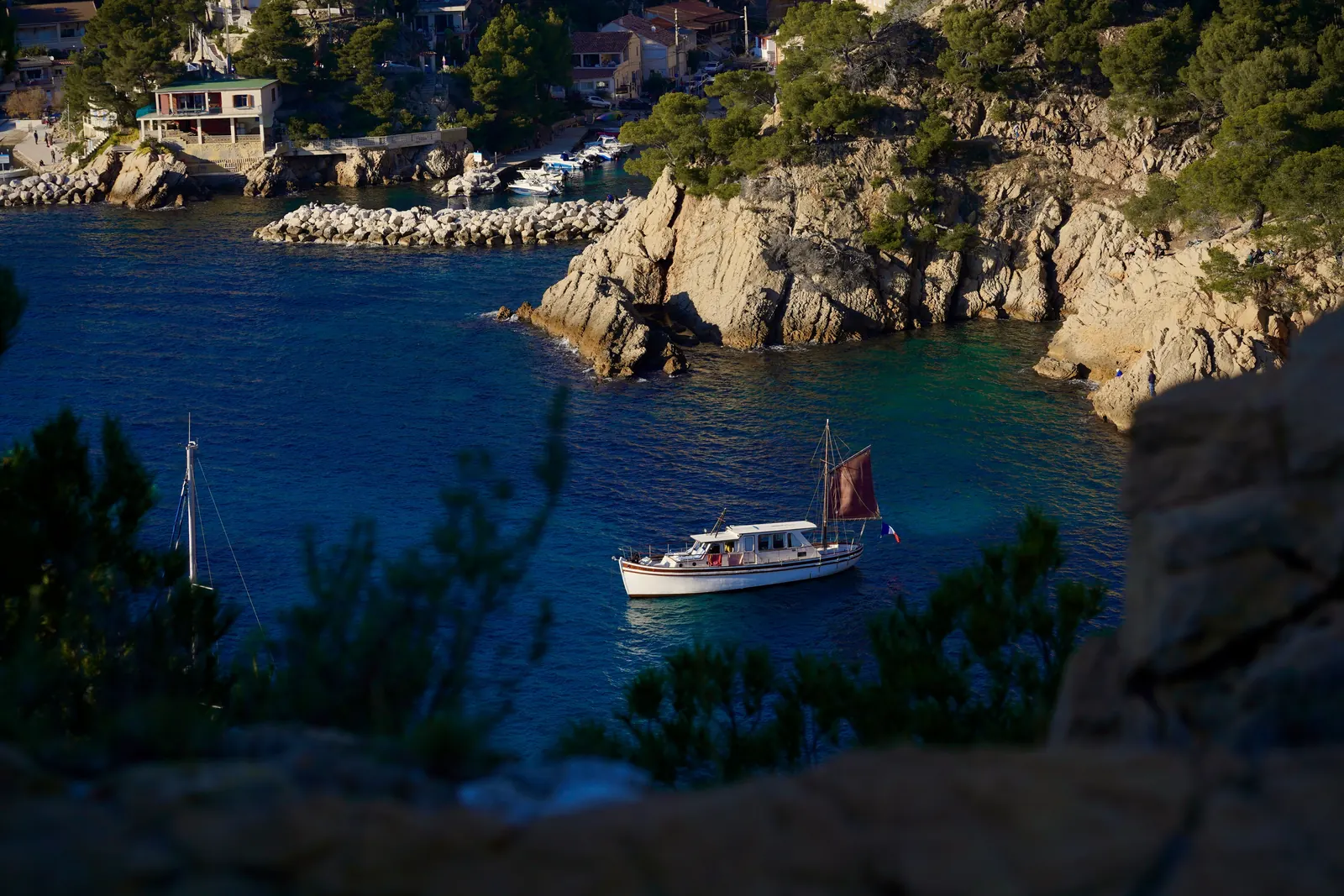
Every calanque looks better from the water, and the big cliffs of En-Vau are best seen from a boat. Shared cruises leave the Vieux-Port and Cassis several times a day; private skippered boats stop for swimming where the rules allow; kayaks can be rented at Cassis and the Pointe Rouge. We compare the options in private boat tours of the Calanques and explain skippered rental in private boat rental with a skipper.
The Cosquer cave
Under Cap Morgiou, 37 m below the sea, a diver named Henri Cosquer found in 1985 a cave painted 27,000 years ago with horses, bison, penguins and hands. The original is closed to everyone; a full-size replica opened in 2022 at the Villa Méditerranée next to the MuCEM, visited with an audio guide in English. Do it on a mistral day when the trails are unpleasant.
A realistic plan
- Half day, easy: bus 22 to Les Baumettes, walk down to Sormiou, swim, lunch at the hamlet restaurant (book), walk up.
- Full day, moderate: bus to Luminy, Sugiton (reserved), then the coastal path to Morgiou, bus 22 back.
- Full day, hard: train to Cassis, Port-Miou, Port-Pin, En-Vau and back, six hours with swims.
- From the sea: an afternoon on a skippered boat from the Pointe Rouge, with a stop at Sormiou.
More ideas around the city in day trips from Marseille.
Frequently asked questions
Which is the best calanque to visit from Marseille?
For a first time with limited effort: Sormiou or Morgiou, reached on foot in 45 minutes from the bus stops with a beach and a hamlet at the bottom. For the postcard: Sugiton from the Luminy campus (reservation required on peak summer days). For the most dramatic: En-Vau, from Cassis, a real hike.
Can I drive to the calanques?
Mostly not. The roads down to Sormiou and Morgiou are closed to visitors' cars in season; the park is reached on foot from bus 20, 21, 22 and 23 terminals, or by boat. Cassis has a car park at the Presqu'île for Port-Miou.
Are the calanques closed in summer?
On days of high fire risk (usually a few weeks between June and September) the massif is closed to walkers; the prefecture publishes the status daily at 18:00 for the next day. Sugiton requires a free online reservation on peak days. Check before you go.