Plan your trip
How to get to Marseille: plane, train, bus, car or ferry
Every way of reaching Marseille compared by people who live here: Marseille Provence airport and its shuttles, the TGV to Saint-Charles, long-distance buses, driving and parking, and the ferries from Corsica.
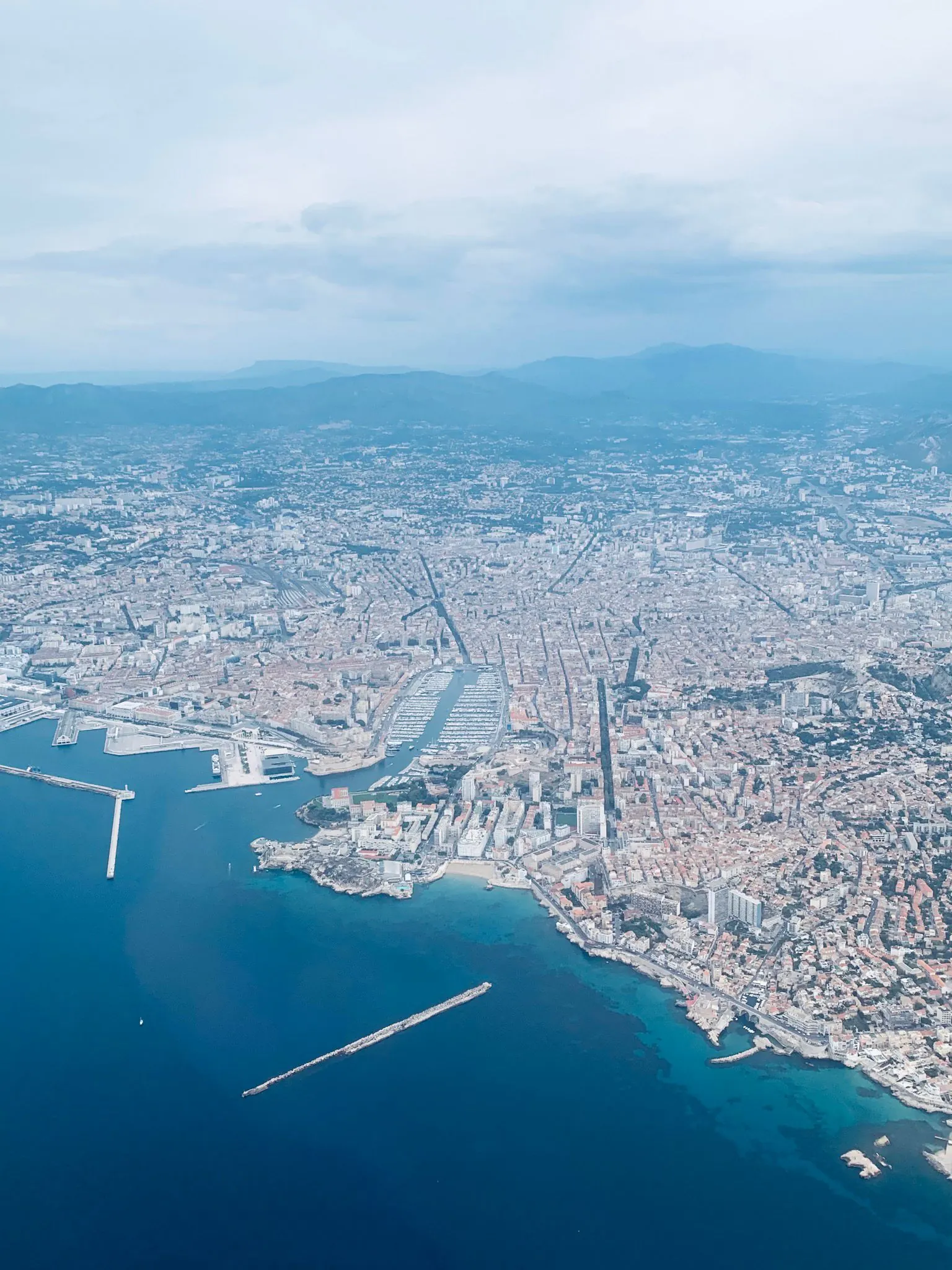
Marseille is the oldest city in France and its second largest, a Mediterranean port that has been receiving travellers for twenty-six centuries. It is also very easy to reach: a large airport, one of the busiest TGV lines in Europe, motorways from every direction and ferry routes across the western Mediterranean all end here. This page compares them honestly, from the point of view of residents who use them every month.
1. By plane: Marseille Provence Airport
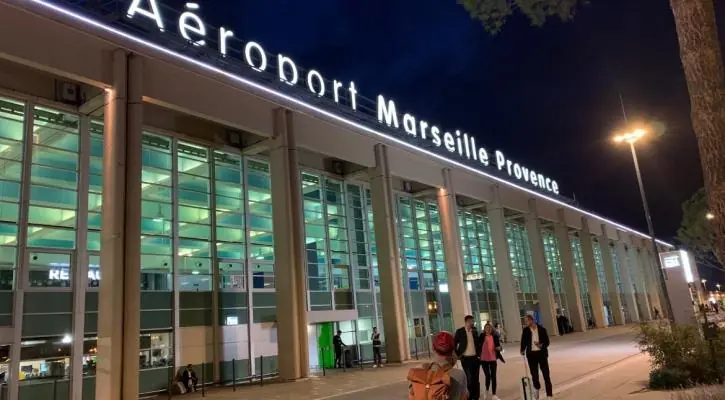
The airport (code MRS) sits about 27 km north-west of the city, next to the Étang de Berre, on the territory of the town of Marignane. Locals still call it “Marignane”. It is the fifth busiest airport in France and receives direct flights from most European capitals and many regional airports, with strong low-cost coverage from the United Kingdom, Germany, Belgium, Spain and Italy.
There are no year-round direct flights from North America. The usual connections are via Paris, Amsterdam, Frankfurt, Lisbon or Dublin. Paris to Marseille is a one-hour hop, but if you land at Paris Charles de Gaulle you may prefer the TGV that leaves directly from the airport station and reaches Marseille in about three and a half hours; it avoids a second security check and a second baggage claim.
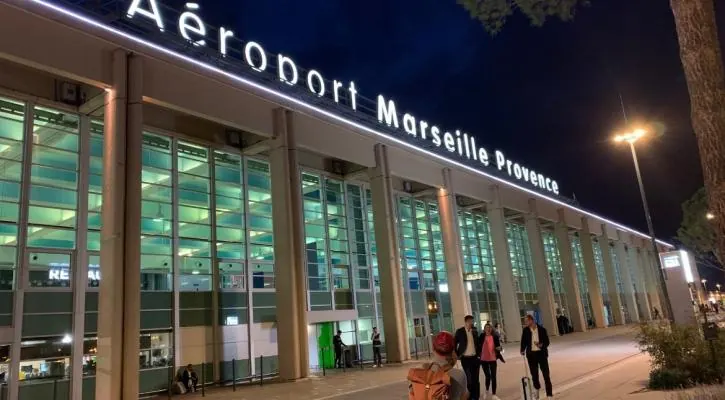
From the airport to the city
- Airport shuttle bus (navette). Departs from the bus station outside Terminal 1, every 15 to 20 minutes during the day, and arrives at the Saint-Charles bus station, on the upper level of the main railway station. The journey takes 25 to 30 minutes when traffic is normal; allow 45 minutes in the evening rush hour. Tickets are sold at the stop and on board by card. This is what we recommend for anyone travelling light.
- Train from Vitrolles Aéroport station. A free shuttle links the terminals with the station of Vitrolles Aéroport Marseille Provence, from where regional TER trains reach Saint-Charles in about 15 minutes. It is cheaper than the bus and useful when the motorway is jammed, but the combined connection rarely saves time.
- Taxi and ride-hailing. Taxis wait outside the arrivals hall; the fare to the centre is fixed by prefectoral decree and displayed at the rank, higher at night and on Sundays. Ride-hailing apps operate from a signposted pick-up area. Count 30 minutes to the Vieux-Port off-peak.
- Private transfer. For groups, families with luggage or a late arrival, a booked transfer is the most comfortable option. We describe how to organise one, and what it should cost, in our airport to Vieux-Port transfer guide.
2. By train: Gare Saint-Charles
Marseille Saint-Charles is the main station and one of the great arrival scenes of France: you step out onto a monumental staircase, flanked by statues celebrating the colonial trade of the 1920s, with the whole city and the Bonne Mère basilica in front of you. Walk down and you are ten minutes from the Vieux-Port on foot.
- From Paris. Direct TGVs from Gare de Lyon take a little over 3 hours, roughly hourly. Low-cost Ouigo trains run the same route for less if you book early.
- From other French cities. Lyon in about 1 h 40, Montpellier 1 h 45, Nice 2 h 30, Toulouse 4 hours, Bordeaux around 6 hours with one change.
- From Spain. High-speed trains from Barcelona reach Marseille in about 4 h 30 in season; otherwise change at Perpignan or Narbonne.
- From Italy. Regional trains along the Riviera connect Ventimiglia and Nice to Marseille; count 4 to 5 hours from Genoa with changes.
Tickets for French trains are sold on the SNCF Connect website and app; prices vary a lot, so book two to three months ahead for the best fares. The station has luggage lockers, a tourist information point, a supermarket and, on the lower level, the bus station and two metro lines.
3. By bus
Long-distance coaches (FlixBus, BlaBlaCar Bus and others) arrive at the Saint-Charles bus station, directly behind the railway station and reached from platform N inside it. Routes run daily from most French cities, from Barcelona, Milan, Turin, Genoa and beyond. It is the cheapest way to reach Marseille and the slowest; from Paris count 9 to 12 hours. For a solo traveller on a budget, or for the Nice to Marseille hop, it works well. From the bus station the city centre is a short walk downhill, and the RTM metro and buses are right there.
4. By car
Marseille is linked to the whole country by motorway: the A7 from Lyon and Paris, the A8 from Nice and Italy, the A50 from Toulon, the A55 along the coast from Martigues. Indicative driving times: Paris 8 hours, Lyon 3 hours, Nice 2 hours, Montpellier 1 h 45, Toulouse 4 hours. French motorways are tolled, and the tolls add up: Paris to Marseille costs about as much as a cheap train ticket.
Our honest advice: a car is useful for exploring Provence, Cassis, the Luberon or the Camargue, and a liability inside Marseille. Traffic is dense, drivers are assertive and street parking in the centre is scarce and monitored. If you do drive in, park in a covered car park (Vieux-Port, Bourse, Charles de Gaulle, Cours d’Estienne d’Orves) and walk. Never leave anything visible in the car.
5. By boat
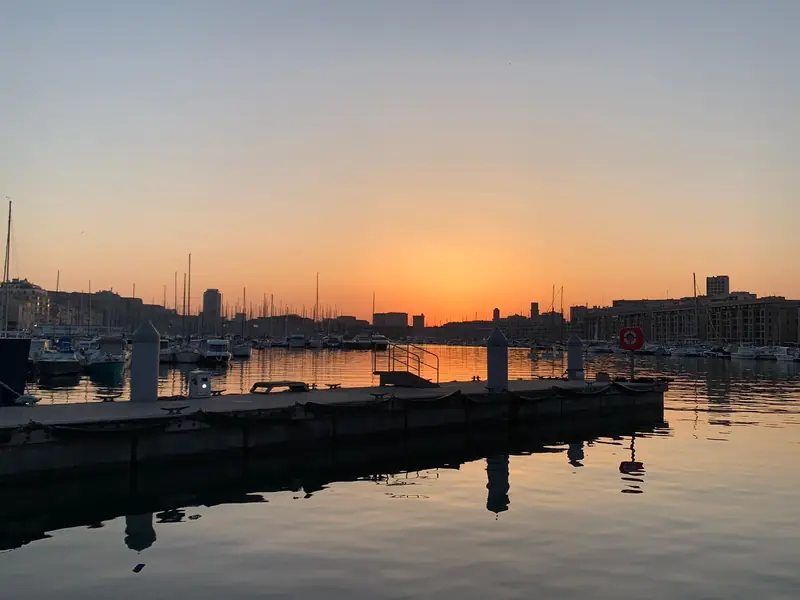
The old port is a marina today, but Marseille remains the largest commercial port in France and a real passenger port.
- Ferries from Corsica (Ajaccio, Bastia, Porto-Vecchio, Propriano, L’Île-Rousse), Sardinia (Porto Torres) and Algeria dock at the Joliette and Arenc terminals north of the centre. The Joliette is served by tram T2 and T3 and metro line 2; the Vieux-Port is a 20-minute walk along the quays.
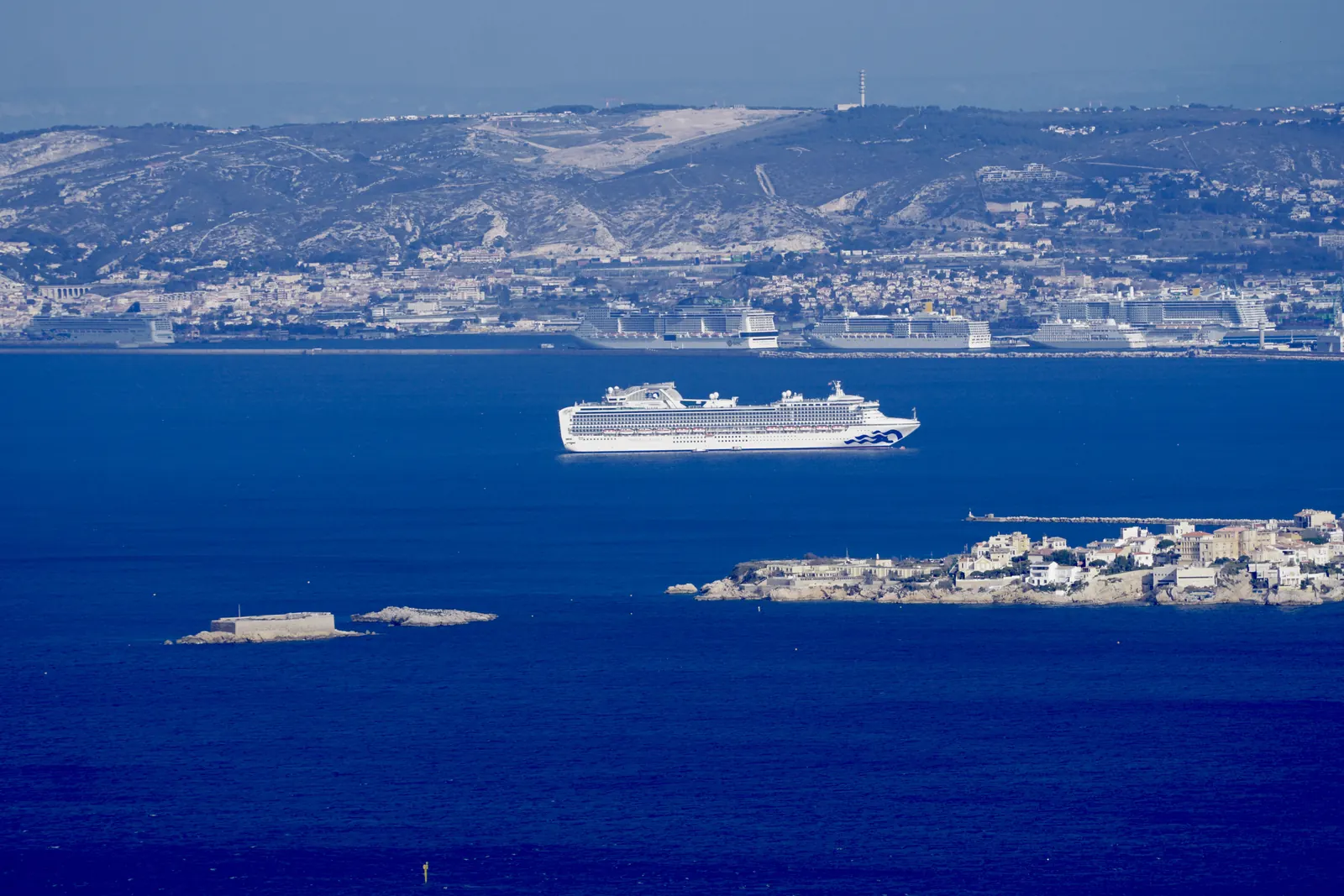
- Cruise ships use the Marseille Provence Cruise Terminal at the Môle Léon Gourret, 7 km north of the centre, and a shuttle brings passengers to the Joliette. We have written a dedicated page for people with one day in port: Marseille on foot from the cruise terminal.
Which one is right for you?
| You are… | Our recommendation |
|---|---|
| Coming from Paris or Lyon | The TGV. Faster door to door than flying, and you arrive in the middle of the city. |
| Coming from the UK, Germany or Northern Europe | Fly to MRS, then the shuttle bus to Saint-Charles. |
| Coming from the USA or Canada | Fly into Paris CDG and take the TGV from the airport station. |
| Touring Provence for a week | A car, parked in a covered car park while you are in Marseille. |
| Combining Corsica and the mainland | The night ferry into the Joliette, a memorable arrival. |
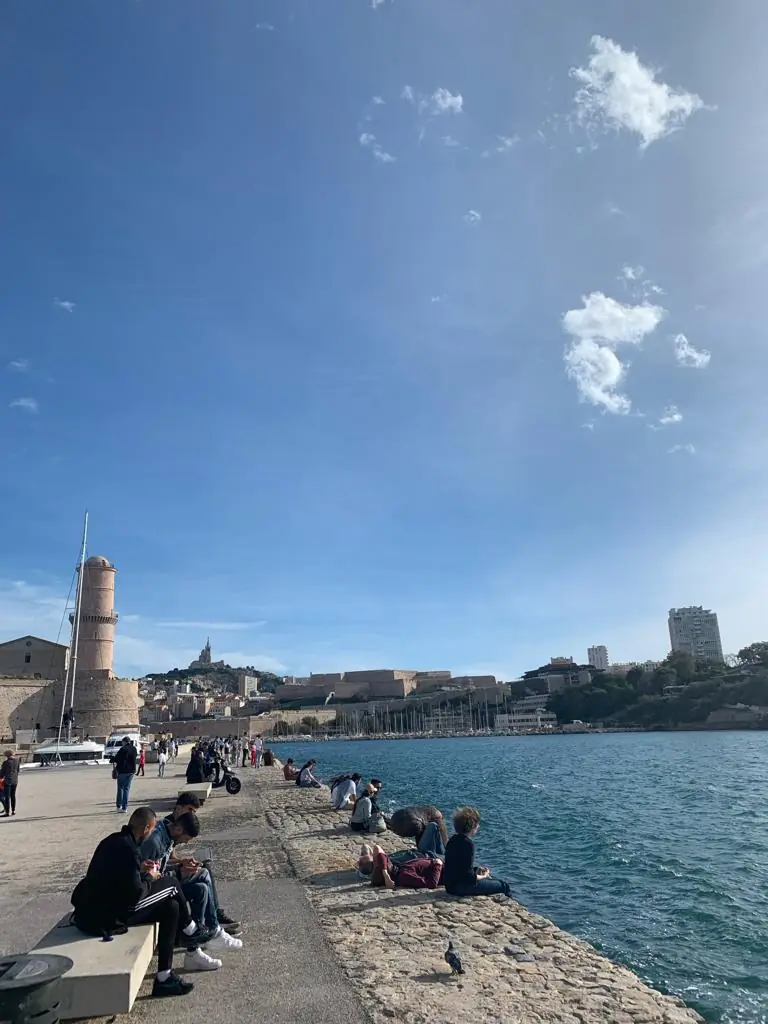
Whatever your route, the first thing to do when you arrive is to walk to the Vieux-Port, order a coffee facing the boats and look up at Notre-Dame de la Garde. Then read our guide to moving around the city and our three-day itinerary.
Frequently asked questions
What is the fastest way from the airport to the centre of Marseille?
The airport shuttle bus to Gare Saint-Charles takes about 25 to 30 minutes and leaves every 15 to 20 minutes for most of the day. A taxi takes roughly the same time outside rush hour and costs several times more.
How long is the train from Paris to Marseille?
The direct TGV from Paris Gare de Lyon to Marseille Saint-Charles takes just over 3 hours, with departures roughly every hour during the day.
Can I arrive in Marseille by boat?
Yes. Ferries from Corsica (Ajaccio, Bastia, Porto-Vecchio, Propriano), Sardinia and Algeria dock at the Joliette and Arenc terminals, a short tram or taxi ride from the Vieux-Port. Cruise ships use a separate terminal further north.