Boats, transfers and the port
Where to buy authentic savon de Marseille (and how to spot the fakes)
Real Marseille soap is made by four soap works and sold in a handful of shops; most cubes in the tourist streets are not it. How to read the stamp, what it should cost, the factories you can visit, and the shops in the centre worth your money.
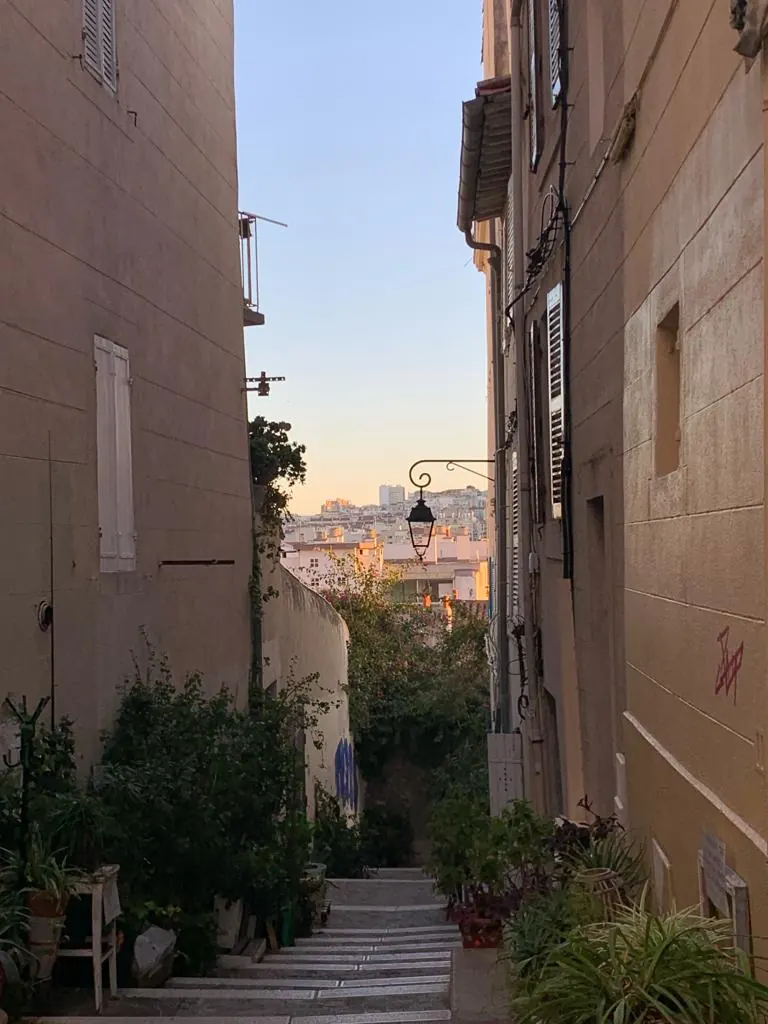
Every second shop in Le Panier sells “savon de Marseille”. Most of it is made elsewhere, perfumed, coloured and moulded into cubes to look the part. The real thing is a specific product made by a handful of soap works in the city and its suburbs, and it is worth finding: it lasts months, cleans everything from hands to floors, and makes the only souvenir from Marseille that people actually use.
What savon de Marseille is
A hard soap made in a cauldron, by the “Marseille process”: vegetable oils cooked with soda for about ten days, washed with sea water to remove the glycerine, poured into moulds, cut into cubes and dried. The Edict of Colbert in 1688 fixed the rule that still defines it: pure vegetable oil, no animal fat. The traditional recipe uses 72 % oil, and that figure is stamped on the cube.
Two families: green cubes made with olive oil (the original, slightly softer, smells of olive), and white or beige cubes made with palm or copra oil (harder, more neutral). Neither contains perfume, colouring or preservatives. There is no legal protection of the name, which is why the fakes are everywhere; the four historic makers formed an association with a logo to fight back.
How to spot a fake in three seconds
- Smell it. Lavender, verbena, honey, fig: not savon de Marseille. Real soap smells of oil and not much else.
- Read the stamp. The maker’s name, “savon de Marseille”, “72 %”, “extra pur”, stamped into the cube on several faces. A paper label alone means nothing.
- Look at the colour. Green-brown or off-white, slightly marbled. Bright colours mean dyes.
- Check the price. Below a couple of euros for 300 g, walk away.
- Ask where it is made. The honest shops will name one of the four works. The others will say “in Provence”.
The four soap works
- Marius Fabre in Salon-de-Provence, since 1900: the reference, with a museum and factory visits. Their cubes are in every good shop in Marseille.
- Fer à Cheval, in the Sainte-Marthe district in the north of Marseille, since 1856: the oldest still in operation in the city, a real factory with cauldrons you can see on a guided visit.
- Le Sérail, also in the north of the city, since 1949: family-run, small, sells directly.
- La Savonnerie du Midi, in the Aygalades district, since 1894: the maker of the Grande Savonnerie and La Corvette brands, factory shop and museum.
A fifth address, the Savonnerie Marseillaise de la Licorne, is a small workshop with a shop near the Cours Julien and another in the Panier, which makes soap in the traditional way on a smaller scale and demonstrates the cutting; it is the easiest visit from the centre.
Where to buy in the centre
- The soap makers’ own shops in the centre: the historic works have boutiques on or near the Vieux-Port and the Canebière, with the full range and staff who know the product.
- La Compagnie de Provence, born in Marseille in 1990, sells a modern, liquid, perfumed interpretation: beautiful, made in the region, but a different product; do not confuse it with the traditional cube.
- The Noailles market and the Grande Savonnerie shop for cubes at factory prices among the spices.
- Avoid: the souvenir shops with pyramids of coloured hearts and cupcakes in the Panier and along the Quai du Port.
Bringing it home
Cubes are heavy: a 600 g block in each direction of the suitcase is a good ballast. Unwrapped is fine; the soap only gets harder with age. For laundry and floors, buy the flakes (copeaux) or the household version in a bag. It is one of the few purchases in Marseille that gets cheaper the further you walk from the Vieux-Port.
More local shopping and food advice, with the words that help, in Marseille for English speakers.
Frequently asked questions
How do I recognise real savon de Marseille?
A cube stamped on several faces with the maker's name, the words 'savon de Marseille', '72 %' (the oil content) and 'extra pur'. Green cubes are olive oil, white or beige cubes are palm or copra oil. No perfume, no colouring, no additives. If it smells of lavender, it is not savon de Marseille.
How much does a real cube cost?
A 300 g cube from one of the historic soap works costs a few euros in the factory shop and a little more in a shop in the centre; a 600 g cube roughly double. Anything sold as 'Marseille soap' for a euro is almost certainly not made here.
Can I visit a soap factory in Marseille?
Yes. The historic works in the north of the city (Sainte-Marthe and the Aygalades) and the museum-workshop in the Panier area offer visits and demonstrations, some in English. Check opening days; production sites are closed at weekends.