History and culture
Marseille's culture and traditions
What makes Marseille unlike anywhere else in France: its mix of origins, the accent and the words, religion side by side, the food from bouillabaisse to navettes, the pastis ritual, the santons, the football, and the rhythm of daily life.
Marseille is, without much argument, the oldest city in France. Founded by Greeks around 600 BC, it has grown into the country’s second city and, along the way, into something unlike anywhere else in France: a port where the world came ashore and stayed. If you are going to visit, here is a look at how people live here, in six parts.
Origins
Ask someone in Lyon where they are from and they say “France”. Ask in Marseille and the answer is “Marseille”. The people who say it come from everywhere: Provence and the Italian coast, Corsica, Armenia after 1915, Spain after 1939, Algeria, Tunisia, Morocco, the Comoros, West Africa, Vietnam, and lately Paris. Each wave landed at the port, settled in the Panier or Belsunce or the northern districts, and became Marseillais within a generation. That is the city’s founding myth, the wedding of a Greek sailor and a Ligurian princess, repeated for twenty-six centuries.
The mix is visible in the street and audible in the market. It is also, contrary to the reputation of the city, mostly peaceful: neighbourhoods are mixed, and the football club, the sea and the pastis are shared by everyone.
Language
Everyone speaks French, and Marseille French is a language of its own. The accent stretches vowels and sounds the final “e” so that bonjour becomes bonjou-reu. The vocabulary borrows from Provençal, the old language of the region, from Italian and from Arabic. A few words you will hear:
- Dégun: nobody. “Il y a dégun” means the place is empty. The club’s motto is On craint dégun, “we fear nobody”.
- Fada: crazy, affectionately.
- Peuchère: poor thing.
- Cagole: a loud, flashy woman, said with a smile.
- Tarpin: very. “Tarpin bon” is high praise for a pizza.
- Emboucaner: to annoy. Also to stink.
Provençal itself survives in place names, in the poetry of Frédéric Mistral and in the Christmas traditions.
Religion, side by side
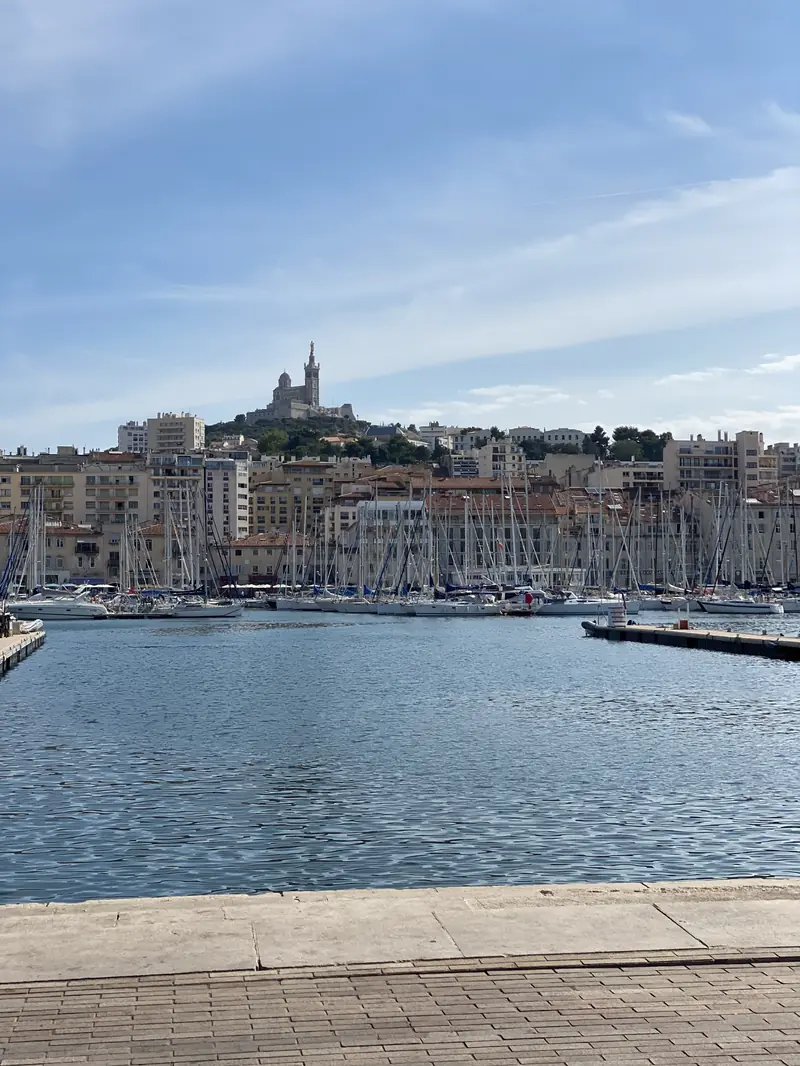
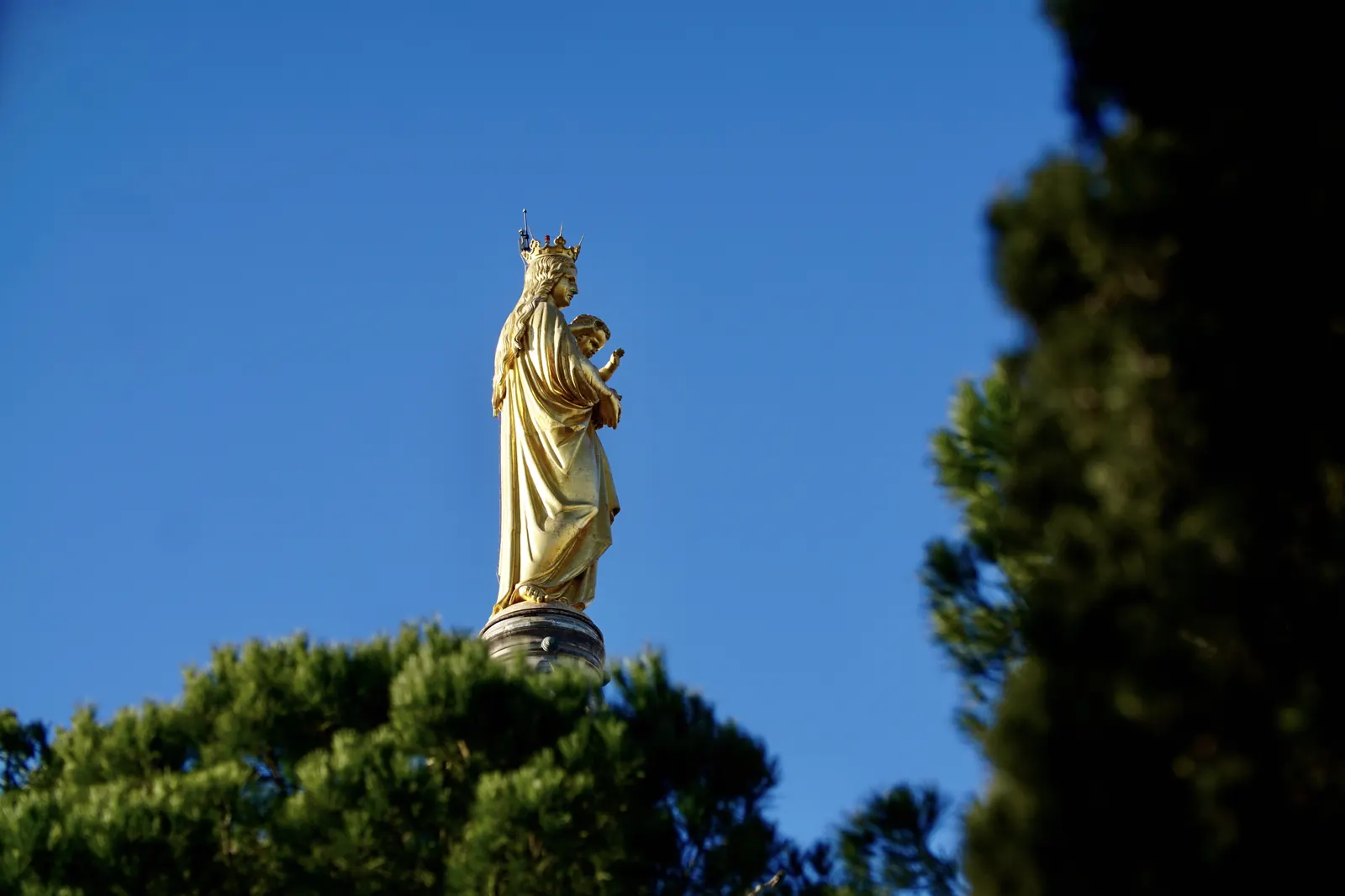
The Bonne Mère on her hill is Catholic, but she is everyone’s. Fishermen of every faith bring her ex-votos, and Olympique de Marseille supporters climb up before a big match. Marseille has one of the largest Muslim communities in France, a large Jewish community with a Grand Synagogue of 1864, Armenian churches, Greek Orthodox and Protestant temples, and Buddhist pagodas. The Vieille Charité, built to lock up beggars, now displays sacred objects from three continents. Coexistence here is not a slogan; it is the daily traffic of the Noailles market.
Food
Talk about eating in Marseille and you are in for a lifetime of arguments. The essentials:
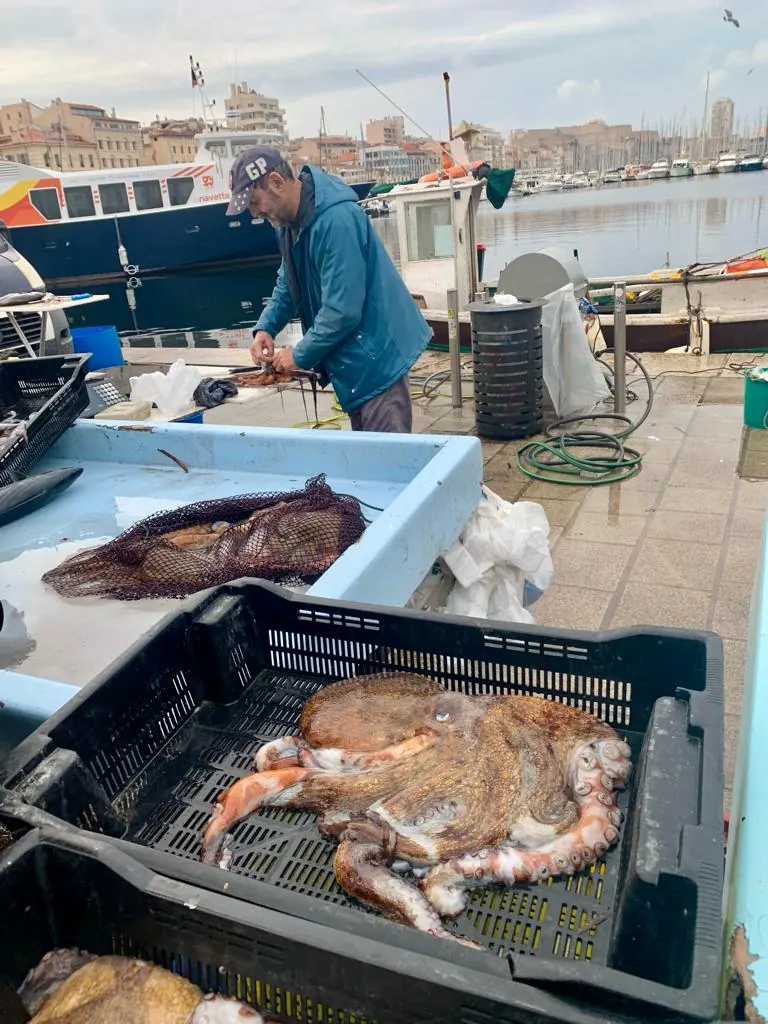
- Bouillabaisse. The fishermen’s stew of rock fish (rascasse, saint-pierre, vive, congre) with saffron, fennel and potatoes, served in two courses: the broth with rouille and croutons first, then the fish. A dozen restaurants have signed the 1980 charter that fixes the recipe. It is expensive because the fish are, and it is ordered in advance. Anything cheap under that name is a fish soup.
- Aioli. Garlic mayonnaise served with poached cod, vegetables and eggs, the Friday dish.
- Panisses. Fried chickpea-flour fritters from L’Estaque, the street food of the city.
- Pieds-paquets. Lamb tripe parcels stewed with trotters and tomato, the winter classic.
- Pizza. Marseille had pizza vans before the rest of France knew the word; the local style is thin, with a half-anchovy, half-cheese tradition.
- Navettes. Boat-shaped biscuits scented with orange blossom, baked since 1781 at the Four des Navettes near Saint-Victor and blessed every 2 February at Candlemas.
- Pastis. The anise apéritif, born in Marseille in 1932, drunk with five parts of cold water, before dinner, slowly, on a terrace.
Traditions through the year
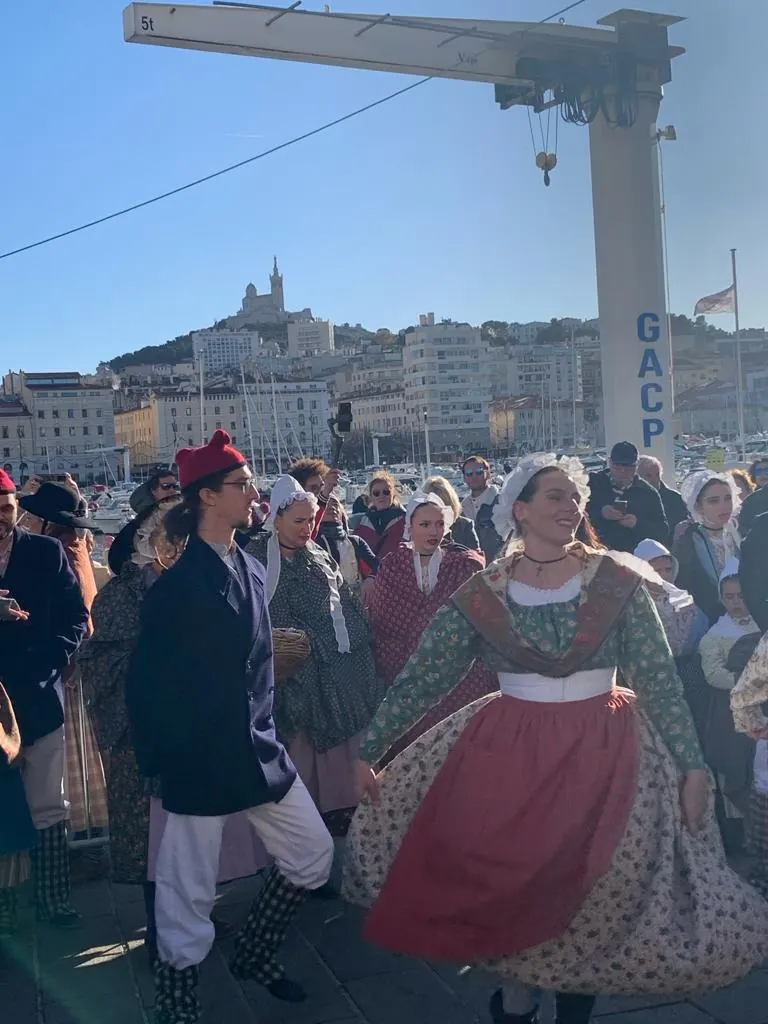
Candlemas in February brings the procession of the Black Virgin at Saint-Victor and the blessing of the navettes. Sardinades, sardine grills, mark the summer evenings in the fishing villages. Football is a religion with a calendar of its own: 67,000 people at the Vélodrome, and the whole city in the bars. In December the Foire aux santons on the Vieux-Port, held since 1803, sells the small clay figures of Provençal village characters that every family adds to its Christmas crib, and the thirteen desserts are laid out on Christmas Eve. Fishermen still hold the prud’homie, the guild founded by King René in the 15th century, which settles their disputes without judges.
Daily life
Step outside and you will see two kinds of people: those who are busy, and those who seem to be doing nothing at all on a bench facing the sea. The second group is not only tourists. Life here follows the light: early mornings at the market and the port, a real lunch break between noon and two when even the offices slow down, the apéritif at six, dinner late. Sunday afternoon belongs to the Corniche, where the whole city walks, and to the rocks, where it swims from April to October.
The best way to understand any of this is to sit down in the middle of it with someone who lives here. That is what our monuments walking tour, with its pastis stop and its lunch, is for. Read the rest of the story in Marseille nowadays, and the practical side in our travel tips.
Frequently asked questions
What is the traditional dish of Marseille?
Bouillabaisse, a saffron-scented stew of rock fish served in two courses with rouille and croutons. Order it in advance in a restaurant that follows the 1980 bouillabaisse charter. Aioli, panisses, pieds-paquets and navette biscuits are the other local classics.
What language do people speak in Marseille?
French, with a strong southern accent and a vocabulary borrowed from Provençal, Italian and Arabic. Words like dégun (nobody), cagole, peuchère and fada are everyday Marseillais. English is understood in hotels and around the Vieux-Port.
What are santons?
Small painted clay figures of Provençal village characters, made for Christmas cribs since the Revolution. Marseille's santon fair on the Vieux-Port, held every December since 1803, is the oldest in the world.